

AI Shifting Gears: A Year from 2nd Gear to Third
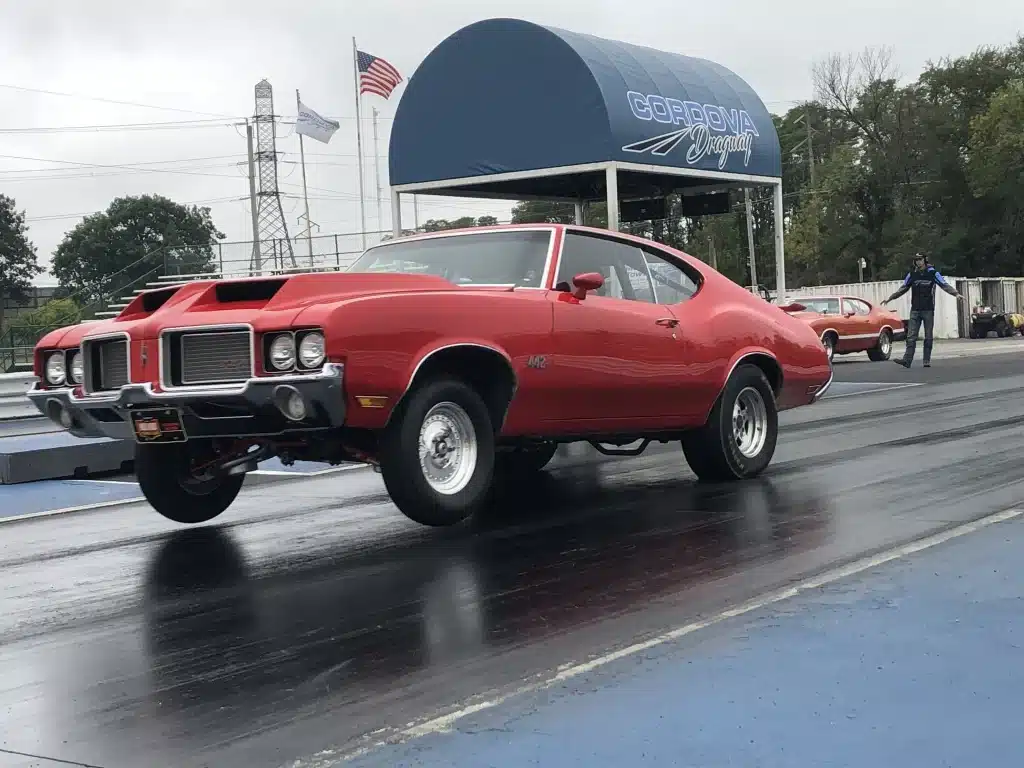
I grew up in the era of supercars: Olds 442, Chevy 454, Dodge Charger R/T, Shelby Cobras, and Mustangs. They usually had floor-mounted, manual transmissions. The most beautiful sound in the world occurs when acceleration in 2nd gear, driving the tachometer past 6,000 RPM, the engine screaming, and then you shift into 3rd gear.
You knew in that moment that real acceleration would kick in, and the change of pitch to a low growl would give your heart a start. A puff of smoke off the rear tires and the way massive horsepower throws you back in the seat are memories that map to how I think about technology. That visceral feeling is my shorthand for what rapid capability increases look and feel like.
Since the inauguration last January 23, AI shifted into second gear, “laying rubber” all the way until the end of January 2026. Twelve months. Four quarters, and 365 days. In that time, I had forecast that AI would double in ability each quarter, for a total of 8x (this is just under one order of magnitude.)
Was I right or wrong? Here is one answer given by AI itself:
If your metric is “how much frontier‑level cognitive labor per dollar can the world buy,” we are in the vicinity of an order‑of‑magnitude improvement over the last year, driven by combined cost, scale, and agentic usage. If your metric is “how much smarter is the single best model at a fixed budget and latency than it was on January 23, 2025,” the honest answer is more like a 2–5x improvement on hard tasks—not yet a full 10x, and strongly dependent on accepting higher time‑to‑think and infrastructure complexity.
The last statement is qualified with “higher time-to-think” and infrastructure. It further stated,
If you invest in that infrastructure, you can get something that behaves like a much more powerful, reliable “AI worker” than early‑2025 chatbots—close to your 10x claim in some workflows.
I’ll take the win, so far! That assessment lines up with what many practitioners see: large, practical gains when teams change how they build systems and accept new tradeoffs. The headline numbers are impressive, but the nuanced truth is about where and how those gains appear.
Looking ahead to 2026, the big question is whether that doubling every 3 or 4 months continues. If it does, 8X will turn into 50–64x, or 6.4 orders of magnitude since January 23, 2025. That kind of growth would not just improve tools, it would reshape what businesses and governments can do with automation, decision support, and creative work.
Will there be substantive new discoveries in programming, and might AI begin to improve its own code base? Will agentic systems and infrastructure investments push AI deeper into society and replace chunks of routine cognitive labor? The short answer to all of these is Yes, even as the exact timing and contours remain fuzzy because breakthroughs can speed things up unpredictably.
My sense is that we have just shifted into third gear, and now we will see big gains in speed until the shift to fourth gear in early 2027. That metaphor helps keep track of phases: raw power, then integration, then systemic change, each with different winners and losers. Expect the ride to be fast, noisy, and not always smooth.