

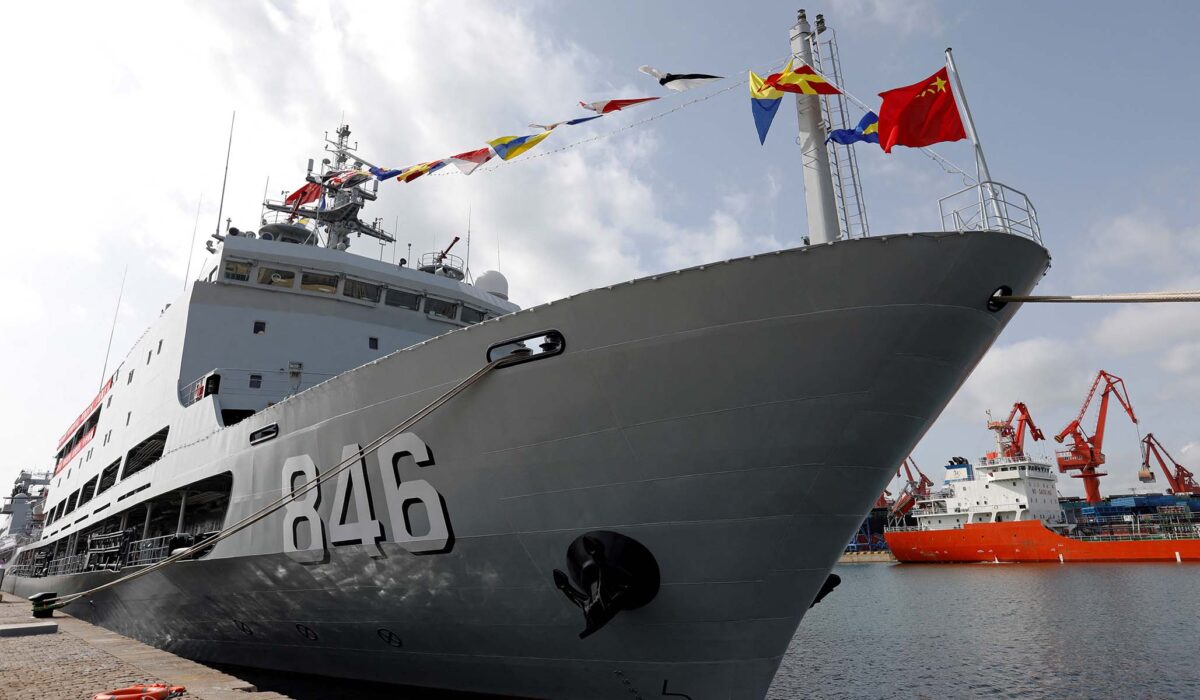
China’s drills: blurring the line between exercise and war
China’s recent maneuvers look less like routine training and more like a calculated push to erase the boundary between exercises and real combat. That shift is not subtle. It is a strategic choice that changes how every neighbor and competitor has to think about risk and response.
What used to be rehearsals for limited scenarios now mirrors the posture of an active campaign, with forces positioned and calibrated to do real damage. Aircraft patterns, naval patrols, and missile deployments are synchronized in ways that minimize warning and maximize confusion. That creates a dangerous fog where a single misstep could become a shootout, not a drill.
This tactic fits squarely into the so called gray zone playbook, where coercion replaces open invasion. The objective is to impose facts on the ground while avoiding the full costs of declared war. It forces adversaries to make hard calls under pressure and to question whether traditional deterrence holds up in ambiguous moments.
For U.S. allies in the region the implications are immediate and practical. They face shorter decision windows and higher stakes for routine incidents at sea and in the air. Deterrence that depends on clear distinctions between training and conflict no longer offers the same insurance against escalation.
From a Republican viewpoint the response is about restoring clarity and strength, not rhetoric. A credible military posture, tighter alliance integration, and hardened defensive systems change the calculus for coercion. Policies that undercut China’s ability to weaponize ambiguity are consistent with protecting American interests and those of our partners.
Economic and technological levers also matter because military advantage is inseparable from industrial capacity. Export controls, tougher screening of sensitive technologies, and resilience in critical supply chains blunt the edge of a rapidly militarizing neighbor. Those steps are about reducing the risk that drills turn into campaigns fueled by cutting edge gear.
Diplomacy still has a role, but it cannot be the only tool when competitors run gray zone operations. Transparent signaling and joint exercises with allies reduce the chance of miscalculation by showing who can and will respond. At the same time, clear consequences for coercive behavior preserve credibility without escalating every incident into a crisis.
Legal and normative tools are part of the fight because rules matter when lines are being erased. Documentation of incidents, unified international messaging, and accountability mechanisms make it harder for coercion to pass as normal. That approach complements military readiness by raising the political and economic costs of aggressive moves.
Ultimately, the pattern is a test of whether deterrence can adapt to ambiguity. If the choice is to treat these actions as harmless drills, the risk of inadvertent war grows. If they are treated as deliberate attempts to change the status quo, then responses will follow that reshape incentives and reduce the payoff of blurring drills and war.