

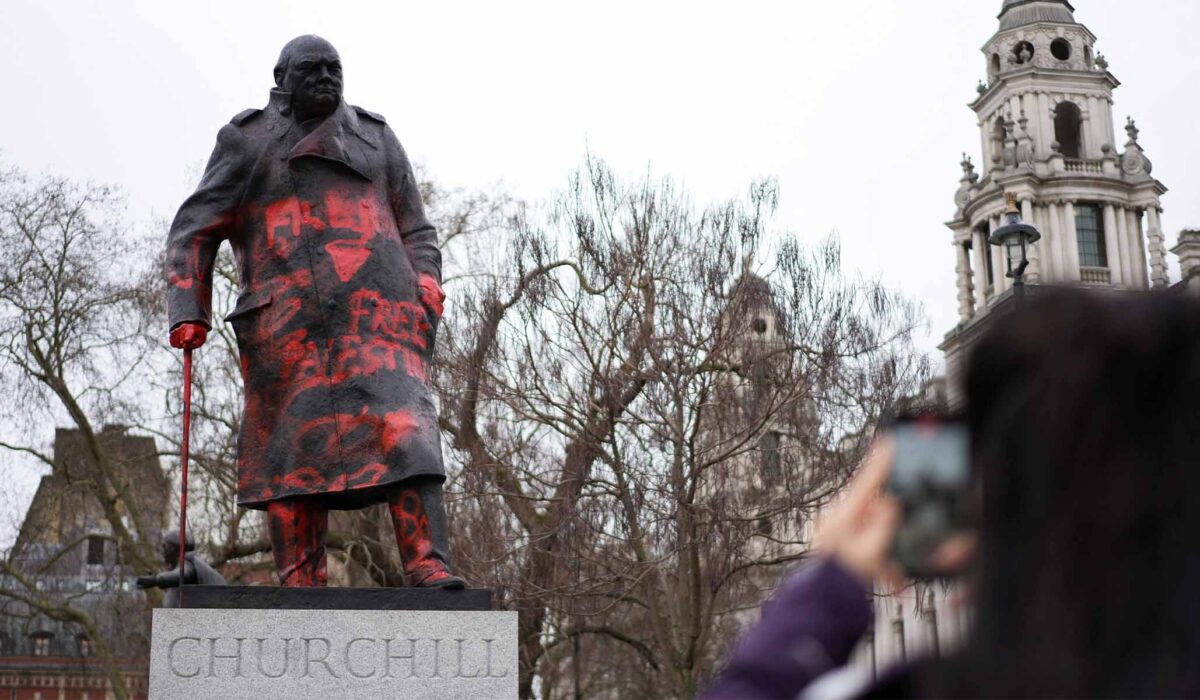
Defacement of the Winston Churchill Statue in Parliament Square: Antisemitism Has No Place
The defacement of the Winston Churchill statue in Parliament Square is a stark reminder that antisemitism must not be tolerated in any form. This act targeted a symbol of British resilience and, by extension, struck at civic order and respect for public spaces.
Vandalism like this is not a legitimate form of protest and it is not protected by respectability or rhetoric. When political anger crosses into damage and intimidation, it becomes a criminal act that undermines the very freedoms people claim to defend.
We should expect authorities to investigate swiftly, gather evidence, and hold perpetrators accountable under the law. A clear, proportionate response reassures the public that symbols and spaces are safeguarded, and that bias-motivated actions have consequences.
Churchill stands in Parliament Square not because he is perfect but because he represents decisive leadership during a perilous era. The debate over historical figures and their flaws belongs in civic discussion and education, not in defacement or erasure from public life.
Antisemitism is an old poison with modern outlets, and it needs firm, consistent opposition from institutions and communities. Political leaders must speak clearly against it and back those words with policies that protect minority communities and ensure equal treatment under the law.
Police, local councils, and national institutions share responsibility for preventing repeat incidents through sensible policing and community engagement. That means protecting property, supporting victims, and working with local groups to defuse tensions before they escalate.
Social media and public discourse also have roles to play; platforms should not be safe havens for hate or incitement. But responsibility runs both ways, and public figures should avoid language that inflames or excuses targeted attacks on communities or monuments.
Educational initiatives are a practical, constructive response—teaching history honestly while promoting mutual respect reduces the appeal of destructive gestures. Programs that pair historical context with civic values help citizens understand both the achievements and the contested parts of public memory.
In short, protecting public monuments and confronting antisemitism are complementary goals: both defend the rule of law and the pluralism that keeps society stable. Effective enforcement, clear leadership, and community-based prevention make it clear that intolerance will not win public space or public sympathy.