

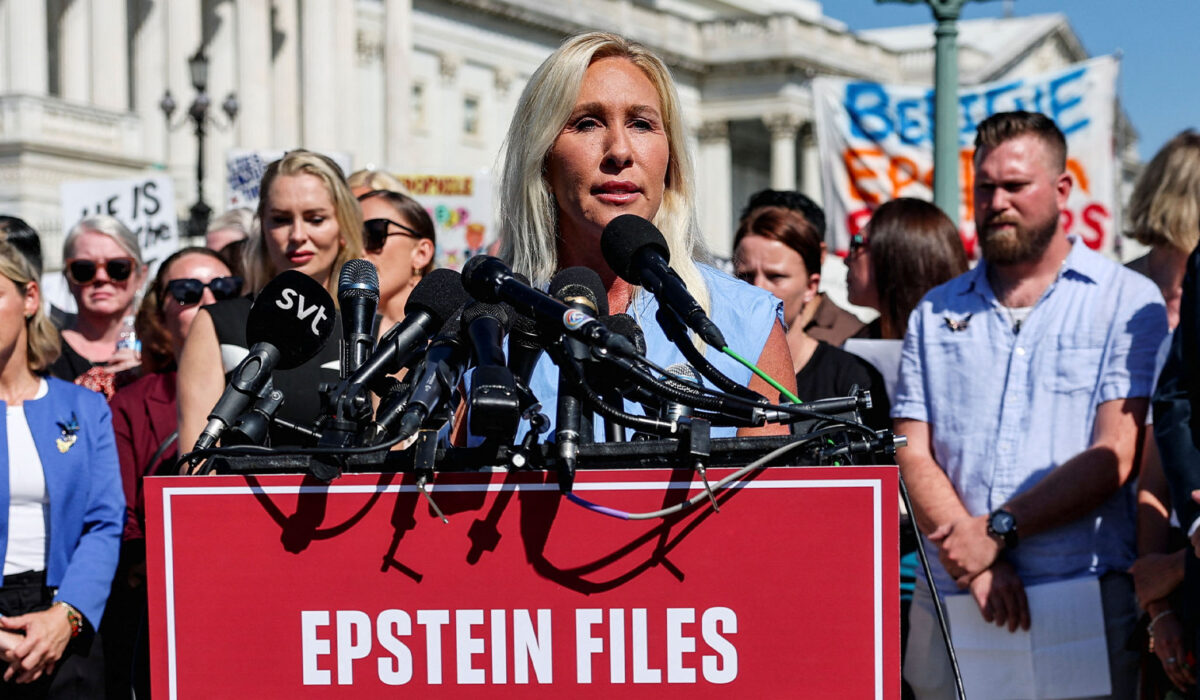
The Unlikely Rise of the Conspiracist in Washington
The conspiracist has become an unexpected beneficiary of a strange shift in Washington, simply because she is now feuding with Trump. For years she was sidelined and labeled extreme, but the moment she clashed with a former president, a new kind of attention followed. That contrast says more about inside-the-beltway priorities than it does about her record.
Washington loves a storyline and will reward anyone who fits into one, even if the reward looks like “respect” instead of policy wins. The media and some elites quickly recast her as serious when her conflict with Trump created a fresh angle. That selective recognition exposes how often political merits are judged by drama rather than by votes or ideas.
From a conservative viewpoint, the situation is messy but useful: Democrats and parts of the establishment now amplify someone they once dismissed, simply because she shakes up their preferred narratives. It’s worth noting that grassroots conservatives never entirely abandoned her, even through the bad headlines. The voters who backed her saw someone willing to challenge the system and stick to convictions that matter to them.
She hasn’t changed much; the capital’s reaction has. The sudden curiosity and cautious praise from elites doesn’t erase past attacks, but it does change the power dynamics inside the party. That shift forces Washington to reckon with a politician who can draw attention and, importantly, influence public debate on cultural and fiscal issues.
This isn’t only about personality or spectacle. The real story is how message discipline and base loyalty can translate into leverage, even for those labeled fringe. When a member of Congress can bend the narrative, committees and colleagues start to calculate differently. That makes her more than a punchline; it makes her a player in legislative and political maneuvering.
Let’s be blunt: Washington’s newfound respect often smells like opportunism. People who once smeared her talk differently now that she has leverage over their rivals. Conservatives should call that out and refuse to let the establishment define authenticity for them.
The feud with Trump complicates conservative unity, which matters because unity drives policy. If intra-party battles produce short-term headlines but long-term fractures, Republican goals suffer. So the relevant question is whether this attention helps conservative priorities like lower taxes, school choice, and stronger borders, or whether it just fuels infighting.
Her approach—direct, unapologetic, and media-savvy—resonates with a certain voter who values toughness over tone. That’s a strength in modern politics where media cycles are relentless and base turnout decides primaries. Political operatives should take note: cultivating a clear brand can yield outsized returns, for better or worse.
Washington’s respect game is often a mirror, not a measure; it reflects who threatens whom more than who is right policy-wise. The establishment’s quick pivot shows fear of disruption, especially when disruption hurts a favored figure. For conservatives who want results, the focus should stay on translating disruption into concrete accomplishments rather than celebrating the spectacle.
This moment exposes both hypocrisy and opportunity. Hypocrisy comes from elites who change tunes depending on who threatens their comfort, and opportunity comes from a political actor who can force the debate. The rising profile of the conspiracist is now a test: will it lead to actual policy gains, or just performative power plays?
Either way, the lesson for conservative politics is clear: outsider energy can be amplified by intra-party drama, but amplification alone does not equal victory. Momentum must be matched with message discipline and legislative savvy to turn attention into outcomes. That balance will determine whether this unusual respect changes Washington for the better or simply rewrites its gossip column.