

IMEC: The Corridor Rewriting Trade, Security, and Governance
The India-Middle East-Europe Economic Corridor, IMEC, is being built as a contiguous system of ports, rails, pipelines, fiber and data centers connecting India to Europe. President Trump called it ‘one of the greatest trade routes in all of history.’ The scale and ambition make IMEC both an economic project and a strategic architecture.
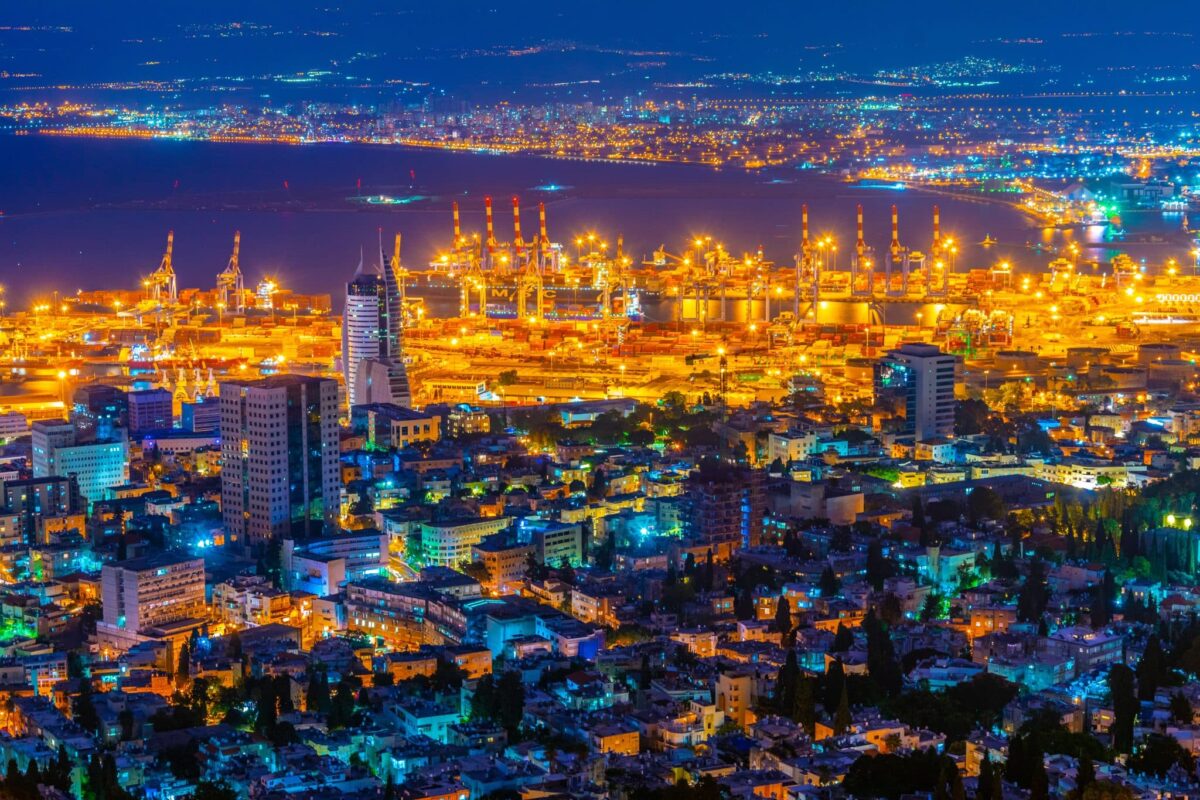
IMEC runs from Indian ports across the Arabian Sea to Gulf terminals, moves cargo by rail through the Arabian Peninsula into Israel at Haifa, and then sends goods west across the Mediterranean into Europe. That route is only the transportation pillar; energy and digital pillars run alongside it. Together they form an integrated trade, energy, and data corridor.
The official MOU was signed in September 2023 and included India, the United States, Saudi Arabia, the UAE, several European powers, and the EU. The stated goals were connectivity, economic development, and an alternative to the Suez and China’s Belt and Road. In practice the design binds diplomatic normalization, private capital, and strategic logistics.
Cost estimates vary by segment from roughly $3 billion to $8 billion, while large global infrastructure funds have pledged hundreds of billions to similar projects. Major construction milestones were publicly reported in 2025. These are not small engineering efforts; they are multi-decade commercial platforms.
IMEC’s eastern sea lane depends on Gulf terminals and therefore on passage through the Strait of Hormuz. The strait is roughly thirty-three kilometers wide and carries about one-fifth of global petroleum liquids and more than one-quarter of seaborne oil. That chokepoint makes security in the Gulf a central, not peripheral, concern for IMEC.
On February 28, 2026, the United States and Israel launched coordinated strikes under Operation Epic Fury; Supreme Leader Ali Khamenei was killed. The IRGC declared the Strait closed to American, Israeli, and Western-allied shipping, tanker traffic fell by roughly 70 percent, more than 150 ships anchored, oil topped $100 a barrel, Qatar declared force majeure at Ras Laffan removing about 20 percent of global LNG, and European natural gas prices spiked about 63 percent in a week. The crisis remains active and it exposed IMEC’s central vulnerability.
Architects of the corridor have anticipated risks by investing in alternative Gulf-access hubs in Oman—Duqm, Salalah, and Sohar—positioned outside the Hormuz bottleneck. Those ports have attracted accelerating investment as practical bypass nodes. Prepared redundancy is baked into route planning, but it does not erase the strategic imperative of securing Hormuz.
Key private actors now sit at critical nodes. Adani Ports holds a controlling stake in Haifa, the Israeli gateway; Adani is simultaneously developing Vadhavan on India’s west coast. Large concession deals by major port operators in the eastern Mediterranean expand commercial reach adjacent to IMEC. These investments show how state-designed frameworks are executed through public-private partnerships.
Infrastructure specifics matter: rails and highways tie Gulf terminals to Jordan and Israel, ship-to-rail transfer hubs speed modal shifts, and competing European ports vie to be western anchors. Electricity cables and hydrogen pipelines are planned to move Gulf and Indian energy into Europe, meeting ambitious hydrogen targets. Fiber systems and data centers stitch a digital nervous system alongside the physical route.
The Blue-Raman submarine cable initiative, with multiple fiber pairs and extremely high capacity, is already in service along parts of this axis, bypassing certain chokepoints. Combined with AI-driven port systems and regional data centers, IMEC is designed for near real-time monitoring and management of flows. That digital layer turns a trade route into an operationally managed corridor.
Diplomacy and reconstruction fit this infrastructure. The Abraham Accords normalized Israel’s role as a logistics node for Gulf states, and the Gaza reconstruction plan presented at Davos proposes a restructured territory with a new port, airport, 180 towers, and half a million construction jobs. Reconstruction is tied to the Board of Peace governance model and, as described by its architects, overseen by ‘a technocratic administration.’
Jared Kushner’s involvement traced a path from diplomacy to commercial stakes: he helped broker the Abraham Accords, founded Affinity Partners, and raised capital from Gulf sovereign funds that later invested in corridor-related infrastructure. That overlap of diplomatic design and private positioning illustrates how geoeconomics and governance now interlock.
From a Republican perspective, IMEC is a necessary strategic response that strengthens allied connectivity and secures alternative trade routes. At the same time the corridor’s technical governance and investor-driven administration raise questions about sovereignty, local consent, and who ultimately controls access to goods, energy, and data. Those governance questions deserve scrutiny as the physical systems rise.
IMEC is visible in cranes, concession agreements, and cable maps. Its success will depend on military guarantees, diplomatic alignment, and the private capital that builds and operates its nodes. Whoever controls IMEC’s architecture will shape commerce, energy security, and the movement of data across three continents.
Comments 1
Author
For over 20 years, Sub Zero & Wolf Appliance Repair Chicago has been the company that homeowners in the Chicago area trust.