

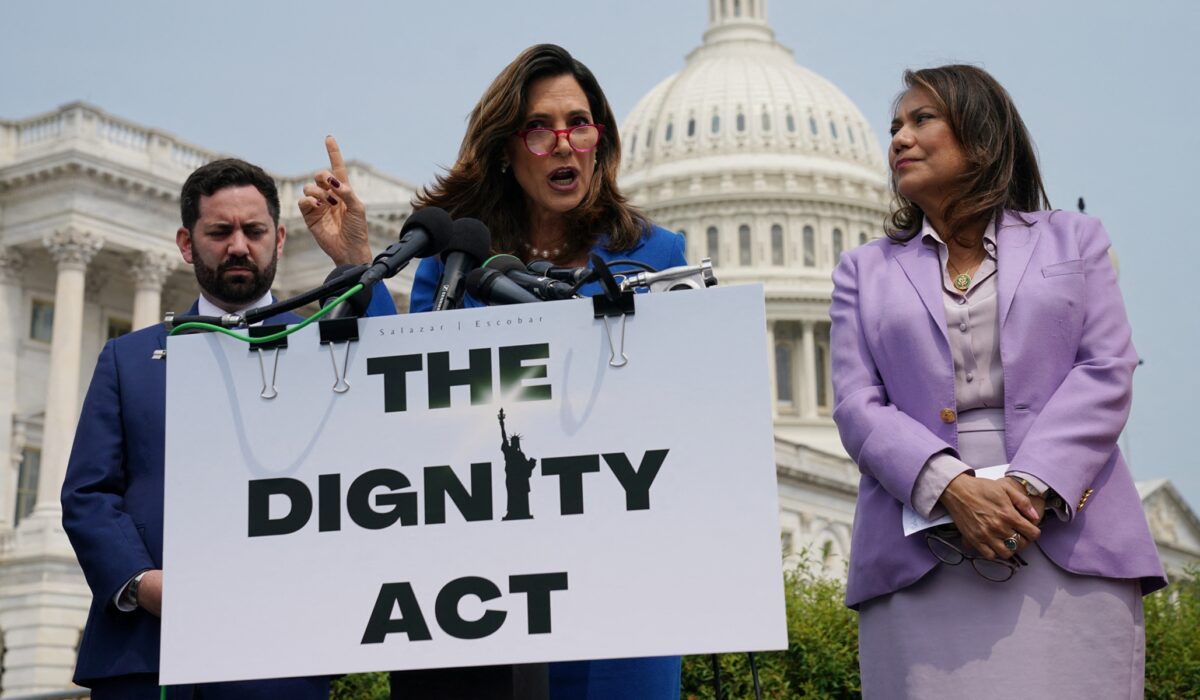
Dignity Act Would Grant Legal Residence to Millions
The Dignity Act is being pitched as a humane fix for immigration chaos, but Republicans see it as a fundamental shift in how the country enforces its laws. This piece examines the proposal from a skeptical, Republican perspective and lays out the practical consequences on security, jobs, and rule of law. The aim is to be clear and direct about what this bill means, not to sugarcoat it.
Make no mistake, the proposal grants legal residence to millions of illegal immigrants.
That single sentence captures the core objection for many conservatives: mass legalization fundamentally changes who we are as a nation governed by laws. When a lawmaker offers residency to millions without stronger border controls, the predictable result is an incentive for more illegal entry. Republicans argue policy should prioritize orderly, enforceable pathways rather than blanket amnesties.
Border security is central to the debate and remains the most immediate shortfall in the bill as described by critics. Without credible physical and technological controls at the border, legal residency provisions risk being a reward for bypassing the system. Republicans stress that sovereignty cannot be optional; a nation must control its borders to control its fate.
The economic impact is another major concern. Granting legal status en masse can shift labor market dynamics, especially in low-wage sectors where many undocumented workers are concentrated. That creates pressure on wages, hiring practices, and the kinds of jobs domestic workers are encouraged or expected to take.
Public services and fiscal effects also figure in the Republican critique. Even when new residents are initially ineligible for certain benefits, long-term access and indirect costs—schools, emergency care, local services—rise with population growth. Conservatives point to the need for honest budgeting when a policy adds millions to the ledger.
Legal integrity matters beyond dollars and measures of security. Lawmakers who normalize illegal entry by promising post-facto residency undermine deterrence and respect for immigration statutes. Republicans warn that repeated episodes of retroactive legalization condition future migrants to expect similar treatment, weakening immigration enforcement overall.
There are, of course, humanitarian and practical trade-offs to consider. Some undocumented people have lived here for years, built families, and are integrated into communities in ways that complicate a single-minded enforcement approach. Still, conservatives argue humane treatment should come with clear rules, verification, and pathways that do not reward evasion of the law.
On enforcement, the Republican position favors robust, verifiable mechanisms tied to any status changes. That means stronger border fencing, better surveillance, faster removals of those without legitimate claims, and tougher employer sanctions to cut the jobs magnet. Without those elements, residency provisions risk being an incomplete fix that simply reshapes the problem.
Political consequences are unavoidable. A law that grants wide legal status will reshape electorates and influence policy for decades. Republicans caution that such a shift should not be decided without clear public consent and without measures that preserve trust in immigration rules.
Alternatives from the conservative bench include targeted legalization for long-term residents combined with strict enforcement and an expansion of legal work visas tied to market needs. Those options aim to address humanitarian cases and economic demand while keeping incentives aligned with legal entry. The Republican view is to manage migration, not reward it.
Ultimately, this debate is about trade-offs and priorities: immediate compassion versus long-term rule of law, open borders versus controlled entry, short-term relief versus lasting incentives. Republicans push for policies that secure the border first, then consider controlled, conditional regularization tied to enforcement and fiscal realism. The Dignity Act, as described, flips that sequence and raises serious concerns about future immigration policy.