

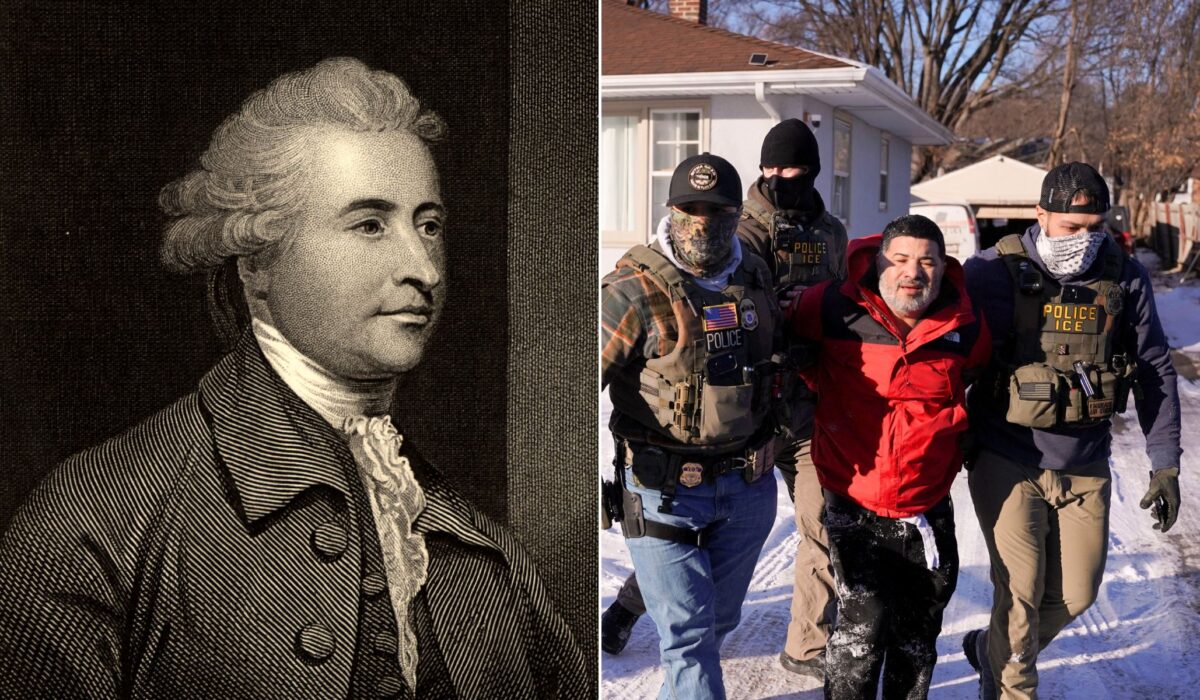
Edmund Burke’s 1775 Warning and Minneapolis
Edmund Burke’s spurned advice to Parliament in 1775 has found new relevance in Minneapolis. That line sits plainly at the heart of a debate about order, reform, and consequences. The comparison is not poetic luck, it is a prompt to think about how states react under pressure.
Burke, writing and speaking in a tumultuous era, urged careful judgment over sudden punishment. His counsel was against overreach that alienates citizens and deepens unrest. For conservatives, that lesson is practical: strong institutions need restraint and clarity to keep public trust.
Minneapolis has been a testing ground for competing approaches to public safety and civic reform. After high-profile incidents that shook the nation, the city tried rapid, sweeping changes to policing and governance. Those moves created new fault lines between officials, residents, and law enforcement professionals.
One lesson from Burke is that principles matter more than slogans. You can insist on accountability while still insisting on law and order. The challenge is to marry reform with stability so neighborhoods do not suffer during the transition.
Republican thinking tends to favor predictable rules and local accountability rather than radical restructuring from the top. When systems break down, people want straightforward answers: police who enforce the law, prosecutors who pursue criminals, and leaders who fix root problems. Minneapolis debates showed what happens when those basics look uncertain.
Economic security is part of the picture Burke anticipated, even if he didn’t use the exact phrase. Crime spikes and disorder sap investment, jobs, and community cohesion. Restoring confidence requires clear priorities and steady leadership that does not flip with every headline.
Another Burkean point is the danger of moralizing from a distance. Policy made in ideological bursts can ignore complex local realities, and that invites unintended harm. Minneapolis learned that top-down fixes without buy-in often meet resistance and produce worse outcomes.
Practical reform means listening to officers, residents, and victims, not just to pundits. It also means measuring results honestly and being willing to adjust course. Those are conservative habits: assess, correct, and defend the institutions that make daily life possible.
Local control matters because civic trust is fragile and built on routine performance. When officers are pulled back and prosecutions dry up, ordinary people pay the price in safety and freedom of movement. A Burke-style humility about rushed change would favor slower, accountable steps rather than grand experiments.
Finally, political clarity helps more than vague gestures. Leaders should state what they will protect, what they will change, and how they will measure success. That accountability keeps both officials and reformers honest, and it prevents the kind of instability Burke warned about.
Minneapolis can be a model if it remembers to combine reform with order and respect for law. Burke’s old warning about hasty punishment and confused policy speaks to modern civic life in a way both simple and urgent. The city’s experience illustrates the balance conservatives argue for: reform that secures liberty and restores safety.