

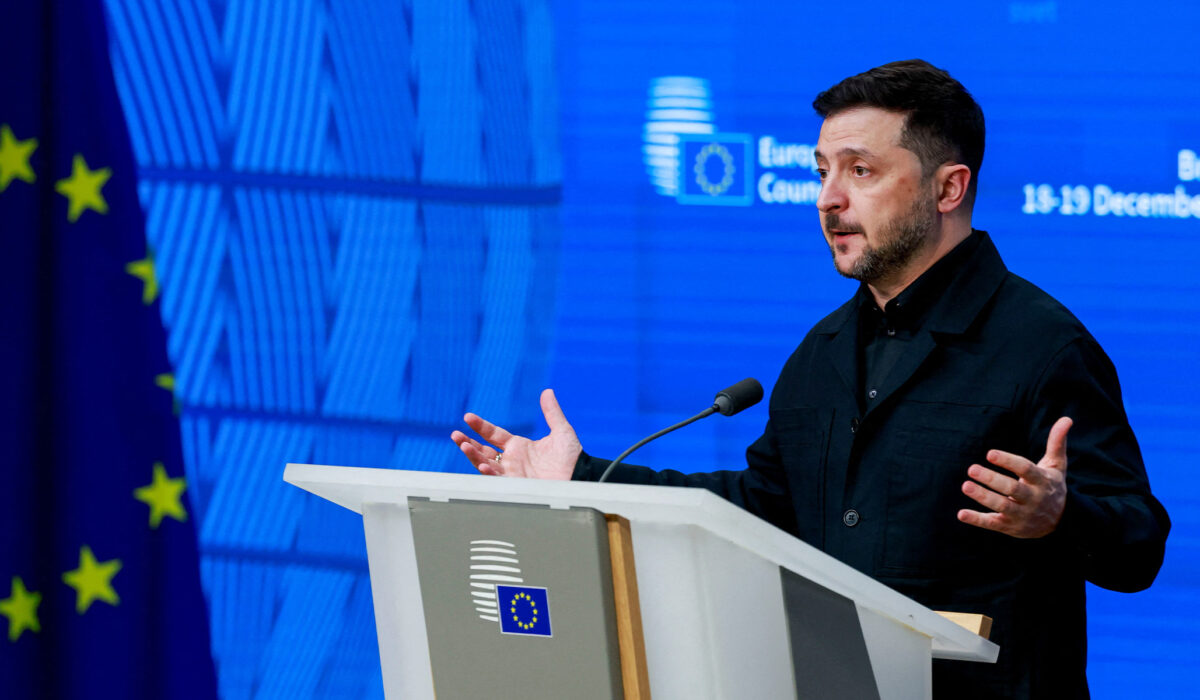
Ukraine Should Move Closer to Europe, Just Not by Joining the EU
Ukraine deserves a stronger place in Europe, and Americans who care about security and stability should back that move. Full EU membership is a different question because it asks European governments to accept long term obligations that will be hard to meet quickly. Supporting Ukraine does not require Brussels to take on unresolved political and fiscal headaches.
The politics of joining the EU are messy and slow, and enlargement costs real money and political capital. Membership demands decades of alignment on courts, competition policy, subsidies, and borders, plus enforcement that often means handing decisions to EU institutions. Those are tough asks for a country at war and for member states wary of additional fiscal burdens.
Membership also means transferring lawmaking power to a distant bureaucracy, which raises questions about accountability and national control. Ukrainians are rightly proud of their sovereignty, and they should not be forced to surrender core policy choices as the price of a European future. Voters in existing member states will balance compassion against their own domestic priorities and that political reality matters.
Practical reforms in Ukraine remain uneven, especially on corruption and judicial independence, and those gaps matter for both security and investment. Rapid accession would risk importing instability into the EU rather than exporting stability from it. Europe can help accelerate reforms without immediately granting full membership status.
From a security perspective, the urgent need is weapons, training, and firm deterrence, not accession timelines. NATO membership or robust security partnerships are the clearest routes to assuring Ukraine’s defense against external threats. Europe and the United States should prioritize tools that strengthen Ukraine’s ability to defend itself now.
There are credible alternatives that deliver deep integration without formal EU membership, such as association agreements, enhanced trade deals, customs cooperation, and visa liberalization. These options create economic ties, regulatory alignment, and mobility while preserving the flexibility to set clearer conditions. That approach rewards reform and performance and avoids forcing premature political union.
Sectoral alignment can go further and faster than full accession: energy grids, digital markets, agricultural standards, and judicial assistance can be synchronized on a timetable tied to measurable benchmarks. Targeted deals unlock investment and help stabilize supply chains across Europe. They also give Ukrainians tangible benefits while maintaining accountability for reforms.
Ukraine’s economy needs capital, predictable legal rules, and access to markets more than membership paperwork. Private investment will follow clearer regulatory alignment and stronger rule of law more than it will follow a membership promise that may take years. Encourage investors with sectoral guarantees, arbitration protections, and simplified customs arrangements.
From a Republican viewpoint, this is about prudence and results. Support should be clear and robust but focused on outcomes—security, sovereignty, and economic growth—not unconditional transfers of authority to a supranational body. U.S. and European taxpayers are right to expect accountability and measurable progress before deepening political commitments.
Europe already faces enlargement fatigue, internal political divisions, and migration pressures that make full accession a fragile option. Pushing membership now risks fueling domestic backlash in capitals that are essential to Ukraine’s short-term survival. A modular approach keeps support sustainable and politically feasible across diverse European electorates.
Practical next steps include binding sectoral agreements, conditional access to EU programs, integrated energy planning, and reinforced security pacts that involve both European states and NATO allies. These moves produce real integration where it matters without immediate transfer of sovereignty to Brussels. That path proves Ukraine’s direction and readiness while protecting the interests of current members and their taxpayers.