

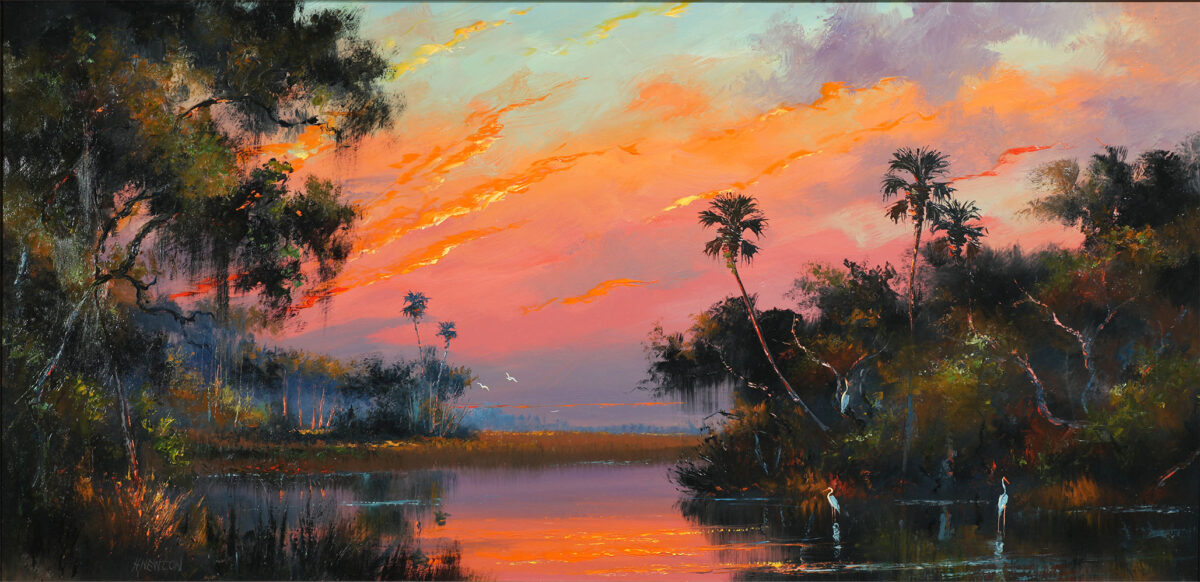
Black Artists Who Painted Florida’s Tourist Dream
For decades a group of Black artists used bold palettes to shape the visual identity of Florida for countless visitors. Their canvases—bursting with flamboyant colors, ocean waves, and swaying palms—became shorthand for sunshine, escape, and leisure. Those images didn’t just decorate hotels and postcards, they set a mood that defined a generation’s idea of paradise.
These painters worked in neighborhoods and studios often overlooked by mainstream galleries, yet their work circulated widely through murals, prints, and commercial commissions. Tourists carried those images home, not always knowing the names behind them, but remembering the sight of neon skies and serene shorelines. The art was simultaneously celebratory and economical, designed to sell the dream of Florida while reflecting real local scenes.
Technique mattered: thick brushstrokes, saturated hues, and playful perspectives turned ordinary beaches and palm groves into stage sets. Many artists mixed figurative scenes with decorative motifs so their pieces read well from a distance on a motel facade or a postcard rack. The result was art that performed—eye-catching, repeatable, and instantly marketable.
Community networks helped spread their work, with local patrons, small galleries, and hospitality businesses acting as informal distributors. Word of mouth and steady tourist traffic amplified visibility, sometimes catapulting individual careers. The market recognition that followed grew unevenly, though, and many creators remained underrecognized by major institutions.
Economic pressures shaped what these artists made and where their work showed up, so commercial viability often guided artistic choices. A poster-friendly color scheme or a compact composition could mean steady income, which mattered for artists supporting families and studios. That commercial side doesn’t cheapen the work; it explains how these images became woven into the fabric of a statewide brand.
Cultural influence extended beyond sales: these images influenced other creatives and local signage, feeding back into the visual language of tourism. Designers, hotel owners, and printers borrowed elements, creating a recognizable look that travelers associated with relaxation and excess sunlight. Over time that look became as iconic as palm trees themselves.
Scholars and local historians are now piecing together archives, identifying names and tracing provenance, which helps reframe these artists as central to Florida’s visual story. Exhibitions and catalogues that focus on regional movements give overdue attention to a generation that balanced craft, commerce, and cultural expression. Collectors who once ignored such work are beginning to reassess its historical importance.
Preservation matters because many original works were produced on inexpensive materials that don’t age well in humid climates. Restoring murals, documenting prints, and safeguarding family collections all help ensure that this visual legacy survives. Community-led projects and local museums play a big role in keeping the story alive for future visitors and residents.
The enduring power of these images is simple: they made a place memorable. When you think of Florida for that era, the memory often arrives as color first—turquoise waves, hot pink skies, green palms, and sunlit figures. Those decades of work weren’t just decorative flourish; they shaped how millions saw a place and, in doing so, made these Black artists indispensable to Florida’s cultural history.