

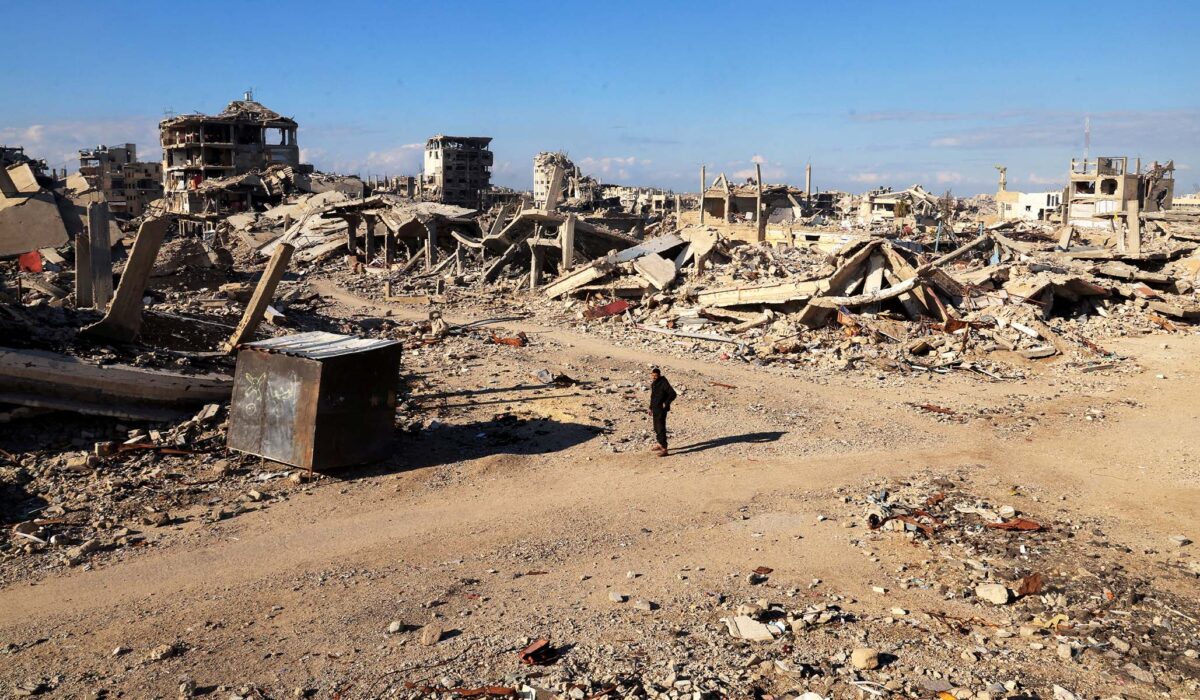
Trump’s Gaza Vision Runs Headlong Into Hamas
Trump’s dream of transforming Gaza into a seaside resort community will come to nothing if Hamas resists pacification.
That sentence captures the hard truth: a cosmetic makeover of beachfront hotels and marinas depends first on breaking the armed grip that keeps Gaza locked in violence and poverty.
Republicans should say this plainly: reconstruction cannot proceed while a terrorist organization runs the show and exports rockets and chaos into the region.
Security is the prerequisite for any serious rebuilding plan, not an optional add-on. Without durable, on-the-ground control that prevents rearmament, private investors will stay away and aid will be wasted. A seaside skyline is meaningless if it becomes a target again.
The mechanics matter. Any credible reconstruction program needs a phased approach that ties infrastructure work to verified demilitarization steps and an accountable local authority. That means checkpoints, inspections, and an enforcement architecture that guarantees Hamas cannot reconstitute its military apparatus.
Expect political friction over who enforces those guarantees. Israel will insist on conditions that protect its citizens, while regional players like Egypt and Gulf states will push for influence and stability. The U.S. under Republican leadership would press for a coalition that balances enforcement with incentives for governance reform.
Money is another hurdle. Large-scale development takes billions, and donors will demand oversight and results. Private investment follows predictable rules: rule of law, property rights, and security; present-day Gaza offers none of those reliably for the long term.
Look at past models for lessons. Nation-building without clear security gains and local buy-in becomes a perpetual financial drain, and that risk is why a measured, conditional approach is smarter than open-ended promises. Republicans tend to favor toughness first and reconstruction later, with strict benchmarks and sunset clauses.
Then there’s the political optics at home. Voters want their leaders to be decisive against terrorism and prudent with taxpayer funds. Selling a resort vision without a plan for how to keep guns and tunnels from spoiling the peace will invite backlash and squander political capital.
Operationally, success hinges on replacing Hamas’s monopoly on force with competent local policing that answers to neutral oversight. That could include an international security force with a clear mandate to prevent arms smuggling and to support civilian policing, paired with fast-tracked economic zones that reward compliance.
Regional diplomacy also plays a role; leverage with Gulf states and Egypt can create pressure points on Hamas and channels for reconstruction dollars, but each partner will demand influence and guarantees of their own. Any sustainable plan must reconcile those competing interests while keeping Israel’s security at the center.
In short, the seaside resort slogan is a useful political image, but it cannot be a substitute for a gritty, enforceable roadmap. If Hamas resists pacification, the bright lights and beachfront cafes never get built, and the cycle of violence continues.