

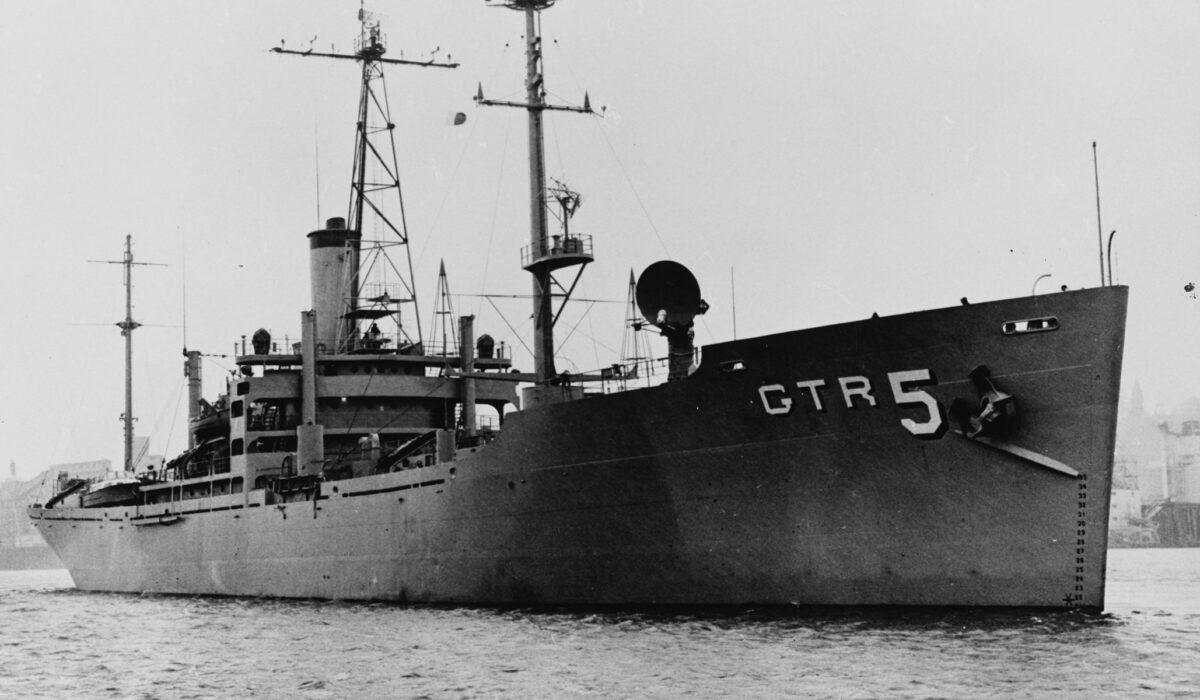
USS Liberty and the Resurfacing Claim of a Deliberate Attack
A half-century-old theory that the Jewish state deliberately attacked the USS Liberty during the Six-Day War has renewed currency. That claim lands hard in political debate because it challenges official accounts and touches a key alliance. It also forces a choice between standing with allies and standing for transparency about American lives.
On June 8, 1967, the intelligence-gathering ship came under attack during the conflict, and the carnage was real. Thirty-four crew members were killed and 171 wounded, facts that do not belong to interpretation. Those numbers demand respect for the fallen and candor about what happened.
Official U.S. investigations concluded the assault was a tragic mistake, the result of misidentification amid a chaotic battlefield. Yet a persistent counter-narrative says the attack was intentional and that key evidence was concealed. That counter-narrative has never entirely faded.
Recent attention has revived that counter-narrative with new books, podcasts, and public discussions, and it highlights gaps in the public record. Conservatives tend to back close ties with Israel, but support for an ally does not mean accepting secrecy about American casualties. A straightforward Republican view is that truth and alliance are not mutually exclusive.
Questions center on why an American ship was not immediately recognized, how identification signals were handled, and what intercepted communications show. Veterans and family members have long pressed for access to every relevant file. Republicans in Congress have a record of pressing for declassification when national security claims are used to withhold information.
For many advocates the issue boils down to proof and accountability. If documents or testimony indicate deliberate action or a cover-up, those findings should guide policy and accountability. If, on the other hand, the original explanations stand up, the record should end speculation once and for all.
Public sympathy for the sailors remains the constant in this debate, and it is right that their service and sacrifice be front and center. The political left and right will spin conclusions differently, but families want clear answers more than partisan points. Keeping that human focus sharp prevents this from becoming only an academic dispute.
History matters for policy, and history matters for credibility. A Republican approach favors standing with Israel while insisting on transparency for American servicemembers and dignity for those who died. Whatever the final judgment, answering the outstanding questions with documents and testimony will be healthier for the alliance and for public trust.