

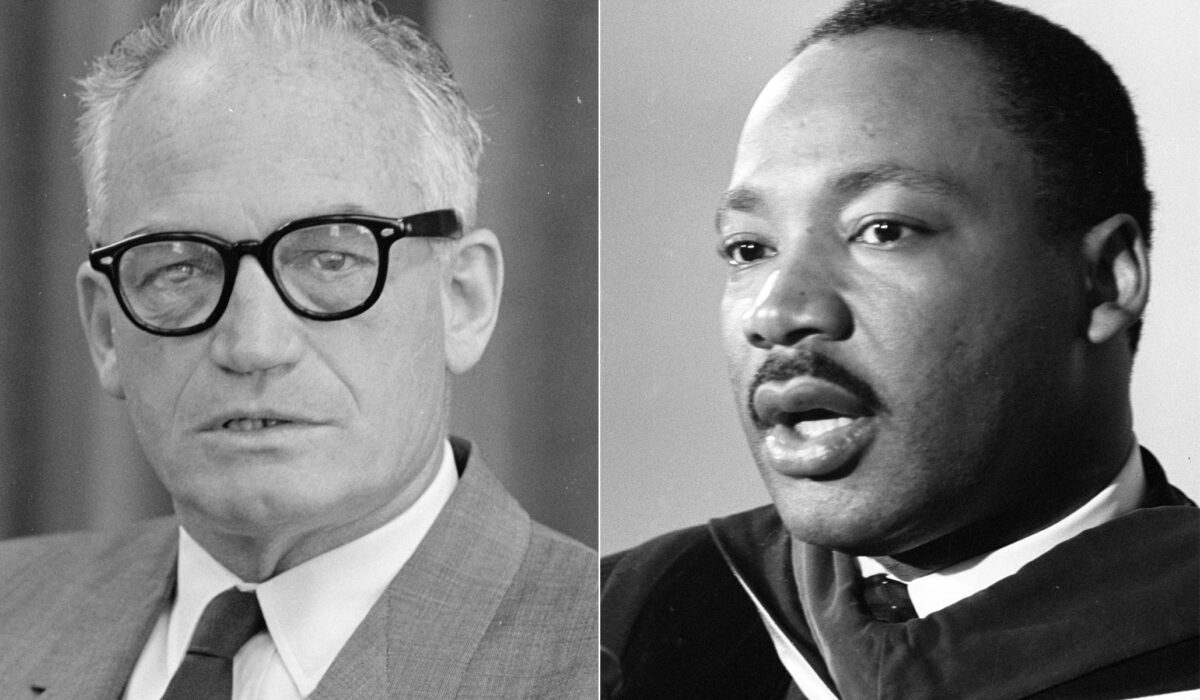
Conservatives, Martin Luther King Jr., and a New Take from Nicholas Buccola
In Nicholas Buccola’s new book, conservatives’ claim to the legacy of Martin Luther King Jr. is misunderstood. That line sets the tone for a debate about history, political inheritance, and what it means to honor a figure without flattening him. Conservatives should engage the claim honestly rather than reflexively reject it.
Buccola’s work forces a simple question: which elements of King’s thought map naturally onto conservative principles? Conservatives can point to King’s emphasis on individual dignity, moral responsibility, and the rule of law as resonant with our values. Those elements allow conservatives to make a case that reveres King while upholding a limited-government, free-society framework.
At the same time, King’s later turn to broad economic critiques and his opposition to the Vietnam War complicate any neat appropriation. He criticized concentrated wealth and institutional injustice in ways that sit awkwardly with some modern conservative positions. A clear-sighted Republican approach accepts the complexities instead of pretending they don’t exist.
Too often the conservative claim boils down to cherry-picking convenient lines and ignoring the rest of the man. Buccola warns against that kind of selective appropriation because it undermines credibility and invites charges of hypocrisy. If conservatives want to invoke King, they have to do so in full view of his life’s arc, not just the PR-ready quotes.
There is also a principled way to stake a claim that does not rewrite history. Conservatives can focus on King’s advocacy for equal opportunity, the dignity of work, and the importance of family and community. Those themes align with policies that promote school choice, entrepreneurship, and civil society rather than centralized state control.
Another point Buccola raises is the difference between symbolic ownership and intellectual inheritance. Owning a symbol is easy; inheriting an idea requires study and application. Republicans can claim King’s principles when they meaningfully translate them into policies that expand freedom and restore agency to individuals.
This approach requires humility and specificity. It means acknowledging where King diverged from conservative thought and explaining why contemporary conservatives still draw from his core teachings. Vague appeals to “freedom” or “equality” without policy detail will not convince skeptical onlookers.
Practically, a Republican argument for King’s relevance should tie slogans to outcomes. Point to criminal-justice reforms that reduce recidivism, education reforms that lift kids out of failing schools, and economic policies that create pathways to stable employment. Those are concrete ways to show how conservative ideas can advance the dignity King championed.
There’s political risk in all of this, but avoiding the debate is a worse option. Critics on the left will accuse conservatives of co-opting King, while voices on the right will worry about diluting principles. A forthright Republican case is to accept disagreement and argue that honoring King means pursuing policies that expand real opportunities for all Americans.
Buccola’s book nudges conservatives toward a better posture: claim with care, explain with evidence, and act with policies that reflect King’s insistence on human worth. That posture wins respect more often than rhetorical grandstanding. It also keeps conservatives honest about the limits of any single historical legacy.
King’s life resists tidy partisan labels, and that is precisely why the debate matters. Republicans can honor his achievements while recognizing the parts of his agenda that diverge from ours, and doing so strengthens rather than weakens a claim to his legacy. The goal is not to possess King but to let his insistence on dignity shape concrete conservative reforms.