

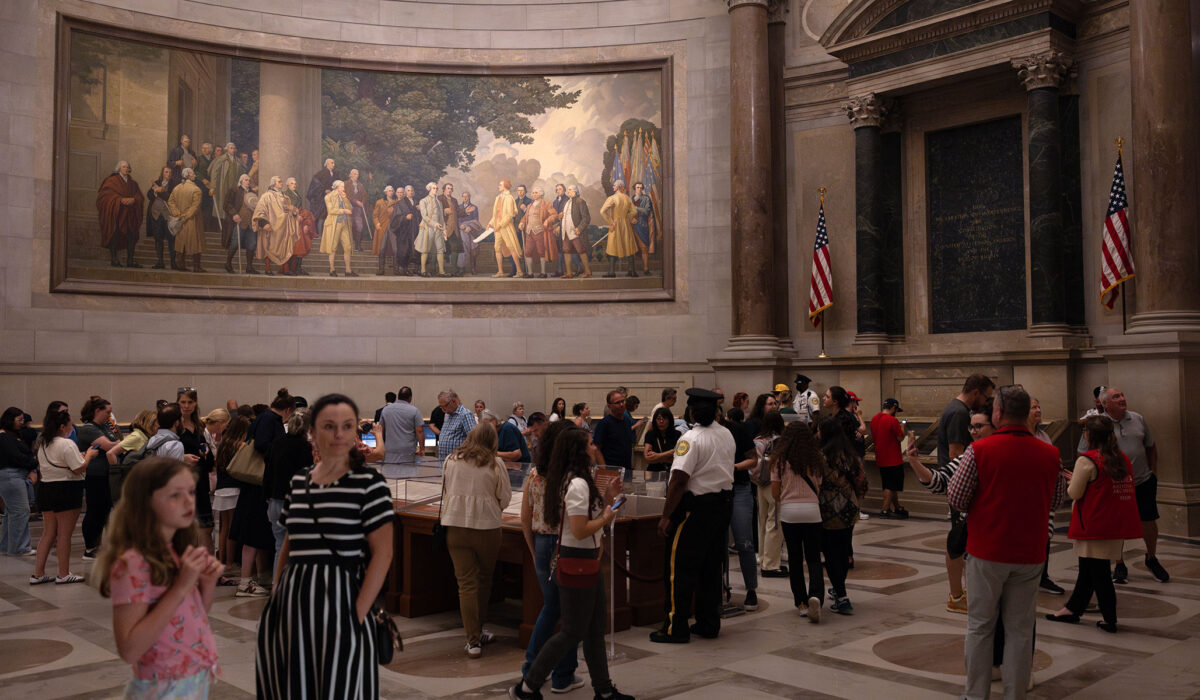
Emancipation Proclamation and 19th Amendment on Display
The installation of the Emancipation Proclamation and the 19th Amendment helps give visitors a more complete view of what America is all about. Exhibiting these two documents together puts center stage turning points in the nation’s legal and moral development. Seeing the physical pages makes history feel immediate and human.
The Emancipation Proclamation, issued January 1, 1863, declared that enslaved people in the rebelling states “shall be then, thenceforward, and forever free.” It is a powerful symbol of the Civil War’s effort to redefine liberty and the limits of federal power. The original document is treated as both a legal milestone and a deeply meaningful artifact.
The 19th Amendment, ratified August 18, 1920, secured the right to vote for women across the United States. That amendment marked a dramatic expansion of the electorate and gave millions a voice in public life. Displaying its text highlights the long, often difficult campaigns that produced that change.
Placed side by side, the two documents trace a line from emancipation to enfranchisement and remind visitors that rights have been contested and won over time. Visitors can see how legal language and political struggle intersect to redefine citizenship. The juxtaposition creates a narrative about progress and the ongoing work of democracy.
Museums and archives handle these items with extreme care, using controlled lighting and climate systems to prevent deterioration. Encased in protective mounts, the pages are readable while shielded from environmental harm. Limited exposure and rotation help preserve them for future generations.
Context is crucial, so displays often include interpretive labels, timelines, and related artifacts that frame each document within a broader story. Educational programs and guided tours help visitors of different ages connect the documents to present issues. Curators aim to make the legal text speak to lived experiences and community memory.
There is an emotional charge to seeing an original document that photographs and reproductions cannot match. Handwritten marks, signatures, and the texture of aged paper anchor abstract ideas in a tangible object. For many visitors, that immediacy sparks curiosity and conversation.
Digital access complements the in-person encounter by offering high-resolution images and transcriptions for study at home or in classrooms. Those resources expand reach without exposing the originals to wear. Online materials make it easier for researchers and students to examine the words closely.
Presenting both the Emancipation Proclamation and the 19th Amendment together encourages reflection on where rights have come from and where they still need to go. These artifacts offer a doorway into the political battles and civic imagination that built the country. They keep alive the sense that history matters to how we live together today.