

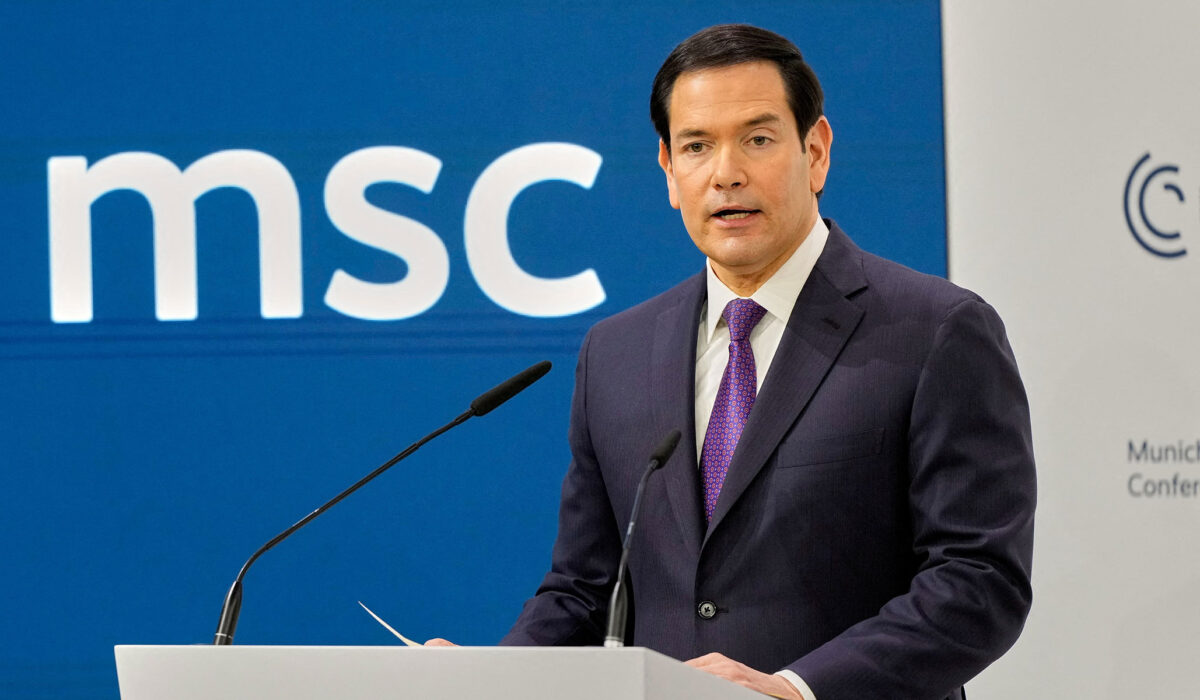
The secretary of state stayed true to President Trump while reassuring Europe
The secretary of state stayed true to President Trump while reassuring Europe, making clear that America’s interests come first without abandoning partnerships. He framed a clear message that loyalty to the president and defense of allies are not mutually exclusive. That balance became the main throughline of his remarks.
He emphasized a straightforward foreign policy rooted in strength and reciprocity, arguing that allies must contribute more and that America will not apologize for prioritizing its citizens. That is a Republican perspective many conservatives recognize: protect home first, then partner from a position of power. It resonates with voters who want clear, unapologetic leadership.
In tone he was firm but not provocative, aiming to calm concerns in capitals that worry about abrupt shifts. Reassurance was delivered as a practical tactic: explain goals, show resolve, and promise predictable behavior. Predictability, paired with firmness, reduces uncertainty for partners and adversaries alike.
On security, he reiterated commitment to collective defense while pushing for fairer burden sharing, a recurring theme for conservatives who have watched free-riding continue for too long. He called for European allies to step up spending and modernize forces so NATO can remain credible. Strengthening defenses is not optional, he said, it is necessary.
He also tied trade and economic relations to national security, telling partners that open markets must be fair and that America will protect key industries. That view blends commercial realism with strategic interest, insisting that trade deals serve American workers and security. Europe heard that ties will remain, but they must be reciprocal.
Energy policy came up as a practical lever for influence, with an emphasis on energy independence and reliable exports to friendly nations. He argued the U.S. will use its energy strength to support partners who share strategic goals. This approach reduces reliance on hostile regimes and strengthens Western cohesion.
Diplomacy was presented as active and direct, not passive or apologetic, and built around clear red lines and open channels. He urged dialogue where interests overlap and firmness where they do not, keeping negotiations transparent and rooted in enforceable terms. That kind of diplomacy aims to avoid confusion and manage expectations.
Human rights and shared values were acknowledged, but framed in a practical way that avoids moralizing from above. He suggested cooperation on democracy promotion should be prioritized where it advances stability and prosperity. That keeps the focus on outcomes rather than virtue signaling.
The secretary made plain that America will defend its core allies while protecting its own sovereignty, a distinction often lost in more idealistic talk. He sought to reassure partners that U.S. commitments stand, provided those partners meet their obligations too. This conditional solidarity rewards responsibility.
Communicating bluntly, he cut through diplomatic niceties to present an agenda that is coherent and politically durable at home. Republicans favor clarity and accountability in foreign affairs, and that was the tone he struck. It reduces second-guessing and strengthens bargaining positions.
For European capitals, the message was simple: expect steadfast support combined with clearer expectations. For American audiences, the message affirmed that loyalty to the president and a firm hand abroad can coexist. That combination aims to secure peace through strength rather than aimless entanglement.
What remains is implementation, which will test whether rhetoric translates into receipts on defense investment, trade arrangements, and coordinated strategy. The secretary’s approach sets a standard conservatives will watch closely, measuring results against promises. If the policy holds, it could reshape how allies and rivals alike respond to American leadership.