

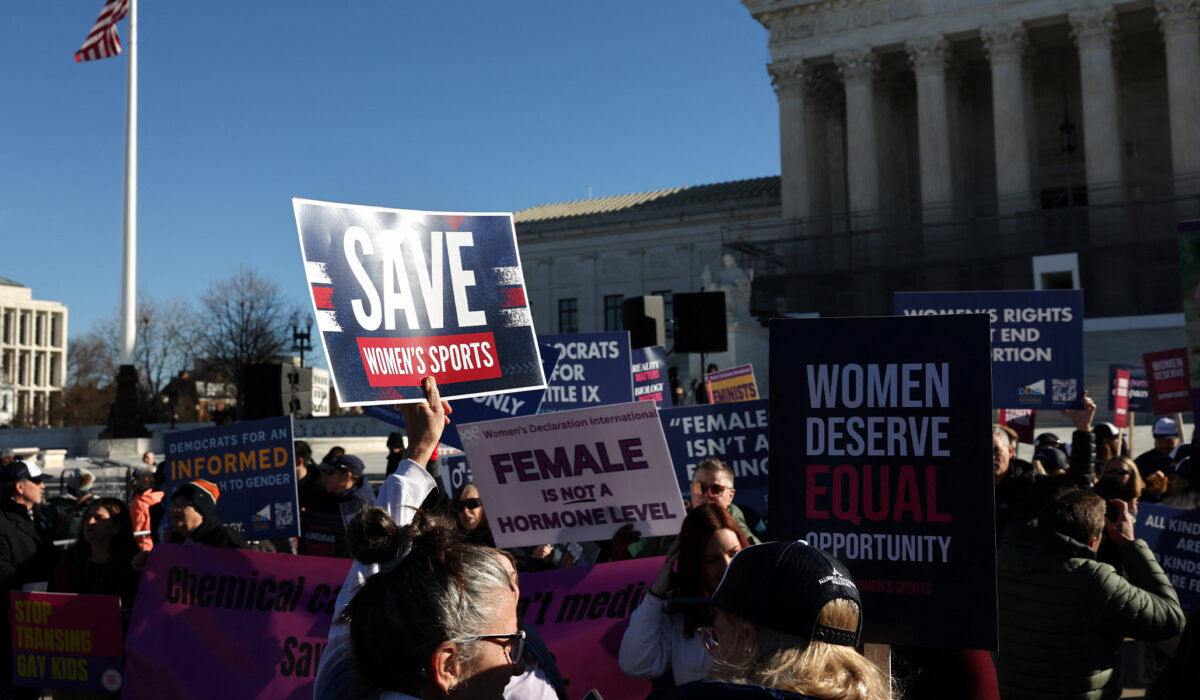
Supreme Court, Women’s Spaces, and the Future of Sports
The Supreme Court can either protect women as a real, distinct class, or it can green-light the erasure of women’s spaces and sports. There is no middle ground. This ruling will touch school locker rooms, college scholarships, and competitive fairness in ways the court should not ignore.
At stake is a simple principle: rules that recognize biological sex preserve fair competition and privacy for women. When law treats sex as a stable category, female athletes and students keep the protections Title IX intended. Ignoring biology in the name of ambiguous identity categories dismantles decades of gains for women.
Republicans argue the Constitution and statutes were written with sex-based distinctions in mind, and judges should respect that history. Courts are meant to interpret law, not rewrite it to match current cultural fads. A clear legal line protects both individual dignity and organizational integrity.
Consider the practical effects on school sports: allowing biologically male competitors in female divisions changes outcomes across every level of play. Scholarships, records, and safety all shift when physiological advantages are ignored. Fans and families notice when fairness is sacrificed, and athletes bear the consequences most of all.
Privacy is not a political talking point; it is a practical expectation in changing rooms and bathroom facilities. Women have a right to spaces where their privacy is protected without controversy. The legal system should reaffirm, not erode, that expectation.
Title IX created opportunities for women that relied on sex-specific classifications to ensure equal treatment in education and athletics. If courts reinterpret sex to mean something else entirely, the protections built into federal law become less enforceable. That outcome would leave schools and guardians scrambling for workable rules.
Judges should ask a narrow question: does the statute, as written, treat sex as a biological category or something broader? Stretching statutes beyond their text invites inconsistent results across states and institutions. A predictable, text-based approach prevents courts from substituting personal views for legislative choices.
There are social consequences to erasing sex-based categories that reach beyond locker rooms and scoreboards. Athletic pathways, college recruiting, and safety protocols are organized around biological realities. When public institutions are forced to bend to shifting definitions, the ripple effects are widespread and disruptive.
Lawmakers, not judges, are the right place for policy debates on identity and accommodations. Legislatures can hold hearings, gather data, and craft tailored solutions that balance inclusion with fairness and privacy. The judiciary’s job is to protect the rule of law while respecting the role of elected bodies in making complex social policy.
Courts that preserve sex-based protections do not close the door on dignity or respect for all people; they maintain the legal foundations that made progress for women possible. Clarity in legal definitions gives schools a framework to follow and athletes a level playing field. The choice before the court will define the next chapter for women’s sports and spaces across the country.
Comments 1
Author
A powerful share, I just given this onto a colleague who was doing just a little analysis on this. And he in reality bought me breakfast as a result of I discovered it for him.. smile. So let me reword that: Thnx for the treat! However yeah Thnkx for spending the time to discuss this, I really feel strongly about it and love reading extra on this topic. If attainable, as you turn into expertise, would you thoughts updating your blog with extra details? It is extremely helpful for me. Huge thumb up for this weblog publish!