

Trump’s Board of Peace and the Technocratic Turn in Gaza
Donald Trump has upended the familiar script on globalization, and a cohort of Washington technocrats are cheering him on. For decades they built networks, ticked boxes and quietly positioned themselves to take charge when the moment arrived. Now they say the playbook is complete and it is time to execute.
I previously highlighted a declaration the United Nations made in 2015, which many ignored at the time. That declaration was stark and ambitious, and it set out a timeline for deep economic change. Read exactly what was said next.
“This is the first time in the history of mankind that we are setting ourselves the task of intentionally, within a defined period of time, to change the economic development model that has been reigning for at least 150 years, since the industrial revolution… This is probably the most difficult task we have ever given ourselves, which is to intentionally transform the economic development model, for the first time in human history”. (Figueres, Feb. 2015 press conference) [emphasis added]
That defined period appears to have closed, and the shift was planned and methodical. The players treated it as inevitable rather than accidental. What we are seeing now is execution, not improvisation.
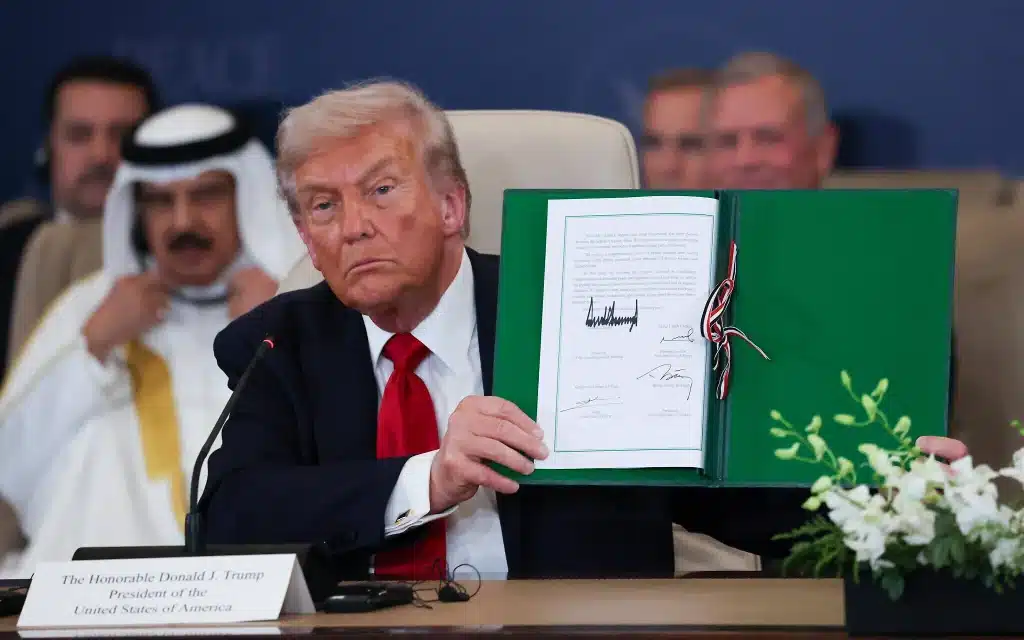
Officials leaked a document called the Charter of the Board of Peace, and observers say it hands broad authority to an inaugural chairman who will “do whatever it wants.” The charter was distributed at elite meetings this week as those in Davos watched. The document explains the Board’s mission in formal terms.
The Board of Peace is an international organization that seeks to promote stability, restore dependable and lawful governance, and secure enduring peace in areas affected or threatened by conflict. The Board of Peace shall undertake such peace-building functions in accordance with international law and as may be approved in accordance with this Charter, including the development and dissemination of best practices capable of being applied by all nations and communities seeking peace.
Sweeping authorities are spelled out for the chairperson in clear legal language. Those clauses make the chair the central architect of subsidiary bodies and operations. Read the operative provisions as written.
(a) Donald J. Trump shall serve as inaugural Chairman of the Board of Peace, and he shall separately serve as inaugural representative of the United States of America, subject only to the provisions of Chapter III.
(b) The Chairman shall have exclusive authority to create, modify, or dissolve subsidiary entities as necessary or appropriate to fulfill the Board of Peace’s mission.
Taken together, these clauses vest the chairman with near-complete discretion over the Board’s structure and agents. The charter itself never mentions Gaza by name, yet Gaza is reported to be the Board’s first field assignment. That choice is revealing about priorities and strategy.
The Times of Israel reports a new governance body called the National Committee for the Administration of Gaza, or NCAG, will be led by Palestinian technocrats. The report quotes an announcement framing the post as managerial rather than political.
The National Committee for the Administration of Gaza (NCAG) will be headed by former Palestinian Authority deputy planning minister Ali Shaath, who the White House in its Friday announcement called “a widely respected technocratic leader who will oversee the restoration of core public services, the rebuilding of civil institutions, and the stabilization of daily life in Gaza, while laying the foundation for long-term, self-sustaining governance.”
“Dr. Sha’ath brings deep experience in public administration, economic development, and international engagement, and is widely respected for his pragmatic, technocratic leadership and understanding of Gaza’s institutional realities,” the White House said.
The inaugural NCAG roster includes prominent American and international figures, some tied to long-standing global institutions and networks. Several appointees are identified with the Trilateral Commission and other elite bodies.
- Secretary Marco Rubio
- Steve Witkoff
- Jared Kushner
- Sir Tony Blair (member of the Trilateral Commission)
- Marc Rowan (billionaire member of the Trilateral Commission)
- Ajay Banga (The President of the World Bank and member of the Trilateral Commission)
- Robert Gabriel
Jared Kushner explained parts of the proposal on video, describing NCAG in managerial terms and insisting it was meant to be “technocratic apolitical committee.” (3:35 mark):
Coverage in the Wall Street Journal frames Kushner’s vision as “Project Sunrise” or “New Gaza,” aiming to transform the territory into a high-tech smart city governed on technocratic principles. That pitch pairs rebuilding with a model of centralized, expert-driven administration rather than traditional politics.
What’s unfolding looks like a handover of governance to networks that prize technical management and institutional control. For Republicans skeptical of technocracy, that is a moment to demand clarity about accountability, sovereignty and who ultimately answers for outcomes.