

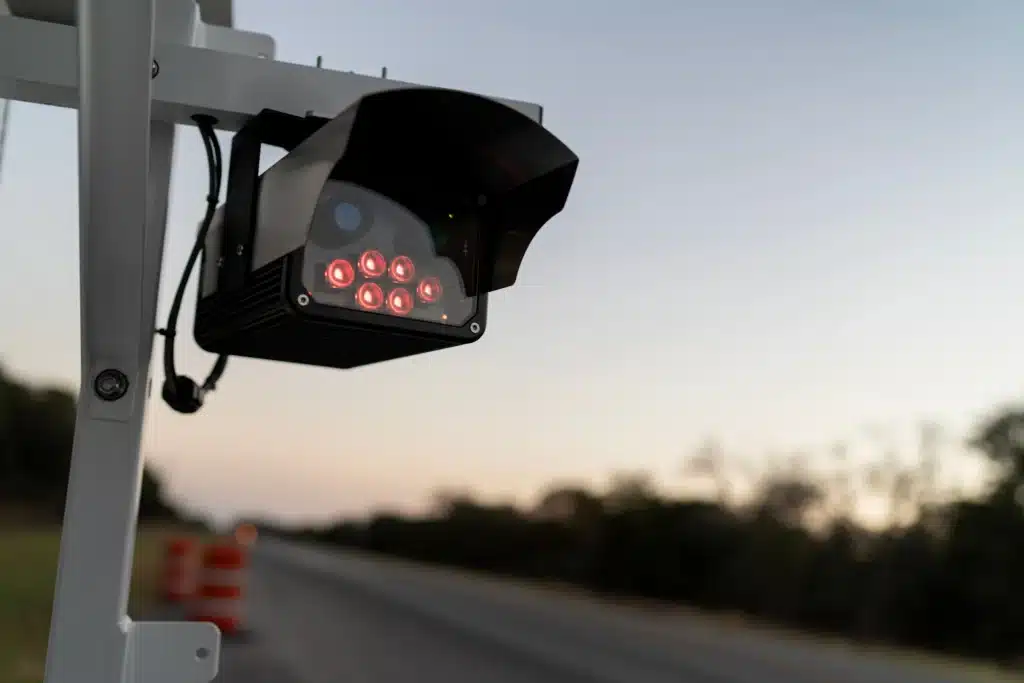
Border Patrol’s License Plate Dragnet and the Rise of Predictive Policing
The federal Border Patrol has quietly expanded a license plate surveillance network that tracks motorists far beyond the border zone. Cameras and algorithms now flag travel patterns, and local officers are sometimes asked to stop those flagged vehicles. This system moves predictive policing from theory into routine traffic stops across American roads.
The program matches collected plate images against lists and patterns to detect what agents call irregular “patterns of life.” Stops are often justified with minor infractions like speeding, tint, or even a dangling air freshener. Drivers get pulled from traffic into intense questioning or searches without knowing they were targeted by an algorithm.
What began as a tool to intercept cross-border smuggling has grown into a national surveillance apparatus. The Border Patrol now taps plate reader systems run by federal agencies, private companies, and cooperative local police. Cameras have been placed hundreds of miles from the border, including in major metro corridors linking Chicago, Detroit, Los Angeles and Texas cities.
The parent agency says license plate readers are “governed by a stringent, multi-layered policy framework, as well as federal law and constitutional protections, to ensure the technology is applied responsibly and for clearly defined security purposes.” The agency also said, “For national security reasons, we do not detail the specific operational applications.” Those lines illustrate the tension between secrecy and oversight.
Legal scholars warn that mass, continuous monitoring can edge toward unconstitutional searches under the Fourth Amendment. Courts have started to push back against “large-scale surveillance technology that’s capturing everyone and everywhere at every time,” a shift that raises questions for future litigation. Predictive systems that label ordinary trips suspicious risk sweeping up law-abiding citizens.
On the ground, the system plays out in stops labeled “whisper,” “intel” or “wall” to hide federal involvement. Local officers receive tipoffs and pull drivers over under state traffic codes, sometimes detaining people for an hour or more while agents search vehicles. Public records show frequent sharing of location data, photos and social media information between federal and local actors.
One trucker was stopped after his route tripped the algorithm, then detained and accused of money laundering for carrying customer cash. No contraband was found and charges were dropped, but the company owner said, “We did everything right and had nothing to hide, and that was ultimately what they found.” The stop still cost thousands in legal fees and a seized trailer.
Another motorist endured an exhaustive search after Border Patrol flagged a short overnight trip near the border. Deputies held him roadside, combed the car, and located nothing. As one deputy put it in a deposition, “The beautiful thing about the Texas Traffic Code is there’s thousands of things you can stop a vehicle for.”
Investigations show Border Patrol builds intelligence by stitching together plate reader feeds, hotel records, and rental car data to map travel across states. Officials describe developing “patterns of life” to spot anomalies and routes that supposedly indicate smuggling. Some devices can capture both license plates and driver faces, expanding the reach of identification.
The agency has linked to databases from private vendors and law enforcement partners, giving it access to broad commercial and public camera networks. In some cases Border Patrol could see multi-city travel histories tied to a single vehicle. That capability turns a routine trip into a searchable entry in a long-term file.
Privacy advocates argue this is dragnet surveillance that erodes civil liberties and chills ordinary movement. Nicole Ozer warned, “They are collecting mass amounts of information about who people are, where they go, what they do, and who they know … engaging in dragnet surveillance of Americans on the streets, on the highways, in their cities, in their communities.” She added, “These surveillance systems do not make communities safer.”
Federal-local chats and records reveal how often agents coordinate stops based on plate data, sometimes asking, “Need BP?” before dispatching Border Patrol officers. Those informal exchanges highlight how seamlessly federal intelligence can be converted into local enforcement. The result is a blurred line between national security missions and everyday policing.
For citizens, the practical takeaway is unsettling: routine travel can be analyzed, annotated and used to justify intrusive encounters. Courts and legislatures will face hard questions about how much surveillance is acceptable on public roads. Meanwhile, motorists keep driving through a system they did not consent to and may never even know targeted them.