

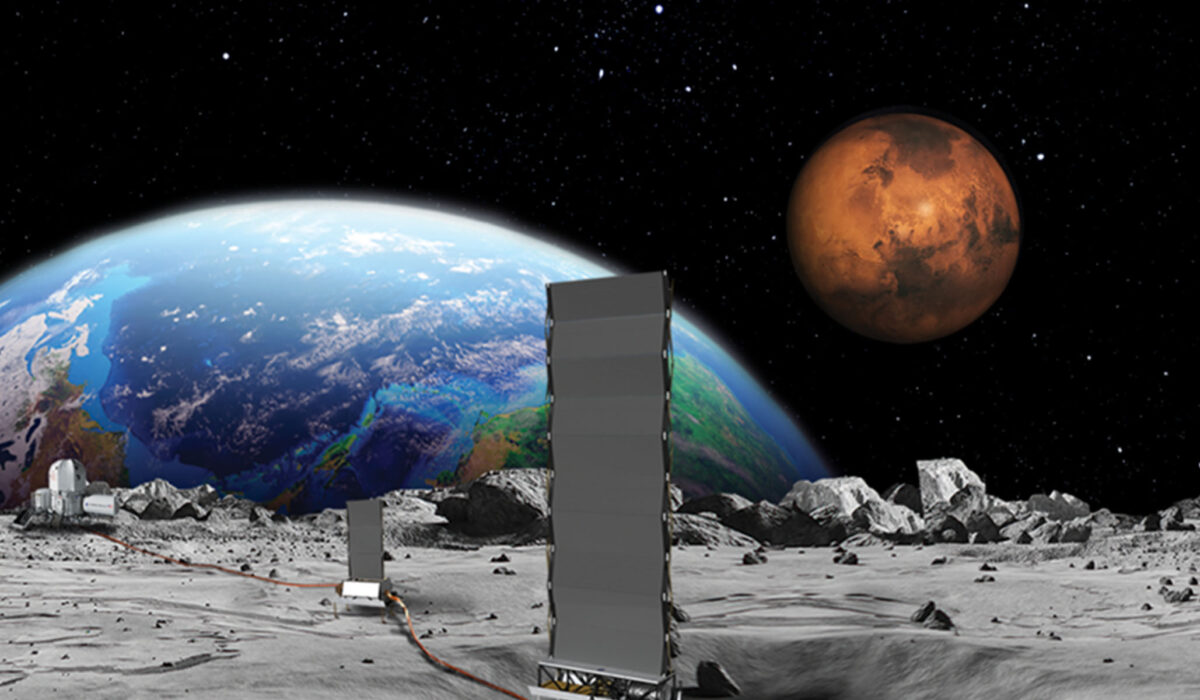
The Moon as a Proving Ground for What’s Next
Human spaceflight has always been a mix of bold goals and careful testing, and the moon is back in view for those reasons. It offers a near-term destination that helps validate technologies, operations, and partnerships before ventures farther out. This piece looks at why using the moon as a proving ground makes sense for science, industry, and mission planning.
‘The moon is not the endpoint. It is the proving ground for what comes next.’
We learned a lot from the Apollo era about crewed operations, radiation, and surface activities, but we need modern testbeds for current tech and techniques. Temporary bases, mobility systems, and life support modules all need real-world stress tests in a low-gravity, high-radiation environment. The moon gives an accessible platform to iterate without committing to interplanetary scale risk.
Testing on the moon reduces risk for Mars and beyond by allowing teams to refine systems under mission-like conditions. Communication latencies, resource extraction experiments, and closed-loop life support can be trialed while rescue options remain more feasible than in deep space. Those lessons shrink unknowns and cut costs for later missions.
Science benefits directly from sustained lunar activity because it creates long-term observational platforms and sample caches. Geology, heliophysics, and astronomy all find value in a stable surface location outside Earth’s atmosphere. Persistent presence means instruments can evolve across missions rather than being single-use experiments.
Commercial firms see opportunity in lunar demand for transport, habitats, and in-situ resource utilization, which could seed new markets. Private investment in cargo delivery, power generation, and surface services can scale if there is predictable demand and clear rules of engagement. That commercial momentum is what turns exploration into a durable sector.
International cooperation on the moon can be practical and incremental, aligning partners around logistics, safety, and science goals rather than grand, binding treaties. Shared infrastructure and interoperable systems let nations contribute according to capacity and get real mission experience. Collaboration also spreads costs and increases redundancy for critical systems.
Engineering challenges remain big: dust mitigation, thermal extremes, and reliable power cycles are all active problems that need in-situ validation. Crew health over repeated exposures, robotics working alongside humans, and affordable launch and transport cadence are also on the checklist. The moon offers the environment to stress these systems while response timelines are still manageable.
Policy and governance must evolve alongside technology to enable operations without stifling innovation or access. Clear norms for resource use, safety protocols, and traffic management will help private and public players coordinate activity on and around the moon. Those frameworks are as important as rockets and rovers for turning experiments into sustainable programs.
Using the moon as a proving ground is a pragmatic path to larger ambitions, letting engineers, scientists, and entrepreneurs mature ideas in a realistic setting. This stage-by-stage approach keeps options open for Mars, cislunar infrastructure, and potential commercial ecosystems. It’s where ambition meets learnable steps and clearer risk profiles for the missions that follow.