

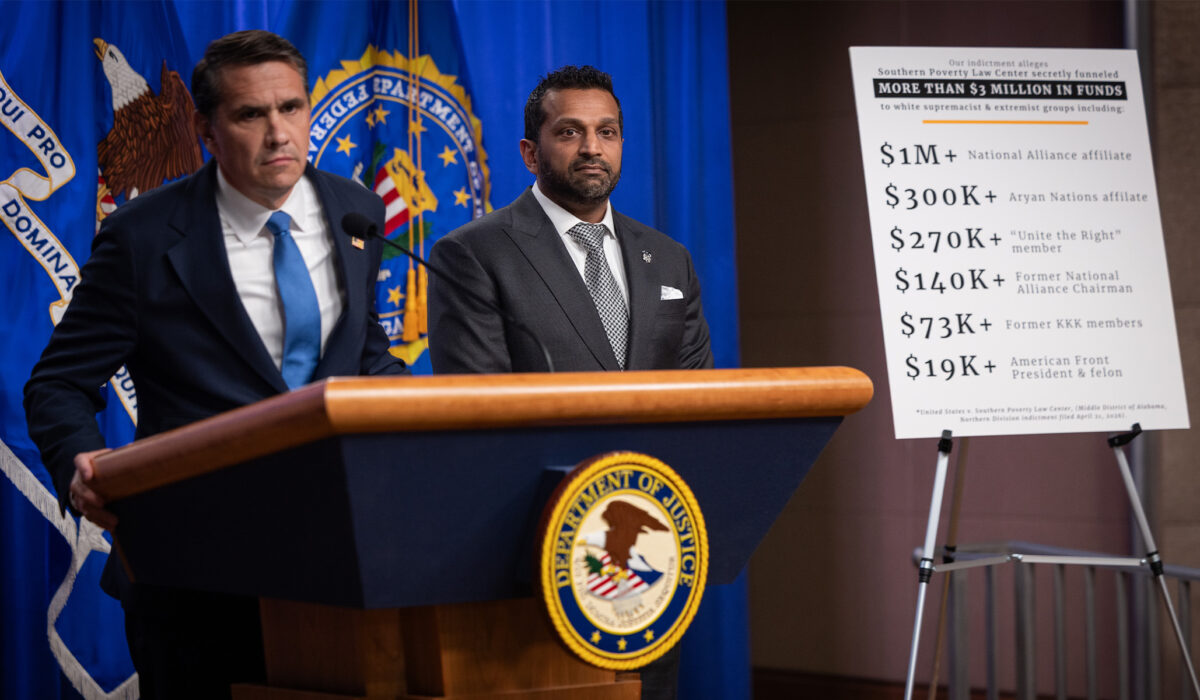
Why the DOJ Case Doesn’t Change How We Should Treat This Group
No matter how the DOJ’s case against the organization turns out, it deserves to be shunned and marginalized.
The Justice Department exists to apply the law, not to hand out moral verdicts, and a court outcome won’t erase the organization’s record. People and institutions assess risk and reputation all the time, and that calculus often demands stronger responses than a narrow legal finding.
This is a political issue dressed in legal clothes, and the public should treat it that way. Republicans believe in the rule of law, but we also believe in consequences from the private sector and civil society when behavior crosses lines.
When an organization builds influence through tactics that undermine norms, platforms and partners are justified in stepping back. Trust is not a legal construct; it is earned and maintained through consistent behavior over time.
Marginalizing a group isn’t necessarily punishment; it’s a defensive move. Businesses, nonprofits, and civic organizations have a right to protect customers, donors, and employees from reputational harm.
That right does not mean government should be the executioner outside courtrooms. Conservative principles warn against letting the state go beyond its role, because weaponized enforcement destroys liberties and sets dangerous precedents.
Still, a healthy society uses non-governmental levers to enforce standards: market choices, social ostracism, and reputational pressure do a lot of heavy lifting. These responses are often faster and more proportional than waiting for prosecutions to wind through the system.
Politically, shrugging and pretending nothing matters invites more erosion of civic norms. If alliances and fundraising ignore troubling conduct, the incentives for misbehavior increase, and that matters to any party that cares about the long-term health of institutions.
There are risks to overreach; private actors can make mistakes and settle into ideological purity tests that chill debate. But the alternative—rewarding conduct that harms norms because a court hasn’t yet convicted—is a poor trade for a free society.
Republicans should push for clear laws, fair enforcement, and protection of speech, while acknowledging that civil society has its own toolkit for accountability. Holding people and groups accountable outside the courthouse is not anti-law; it’s pro-responsibility.
The real question is how to balance these tools without letting either the state or a moral majority become the final arbiter of acceptable views. That balance starts with clarity about values, consistency in applying consequences, and respect for due process when the law is involved.
Whatever the DOJ decides, the public and private sectors will continue to judge organizations on behavior as much as on legal status. That judgment is part of the political and cultural economy we all share, and it will shape how power is used going forward.