

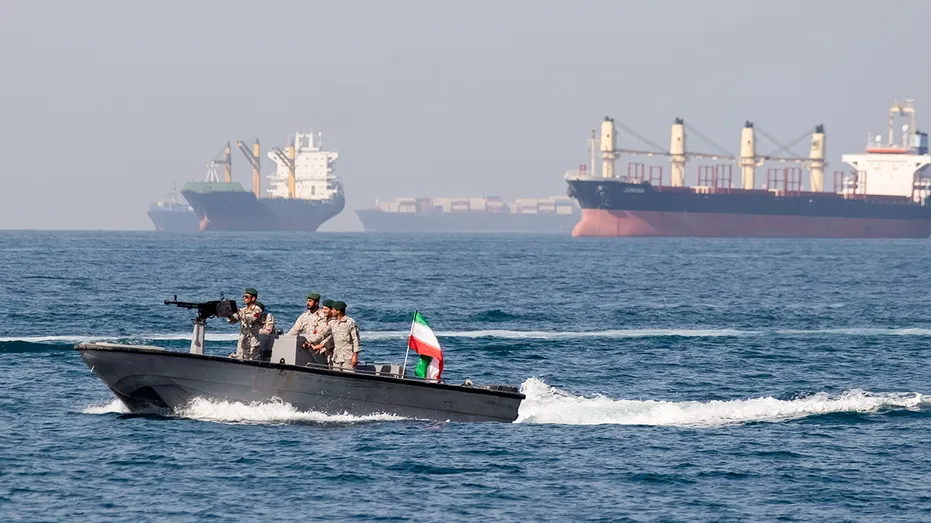
Why the Strait of Hormuz, Not Iran’s Nukes, Drove the War
I argue the conflict with Iran was never mainly about nuclear material; it was about seizing control of the Strait of Hormuz. The media reflected that shift rather than caused it, recycling a narrative that suited the moment. That pattern of narrative management is obvious when you trace the timeline.
Before strikes, the coverage centered on Tehran’s supposed nuclear restart and missile threat. Trump’s State of the Union on February 24 claimed Iran had restarted its nuclear program and was developing missiles capable of striking the U.S. Administration figures — Vance, Rubio, Witkoff — leaned into that framing as the chief justification for action.
A secondary, moral frame also ran: in January 2026 Iranian security forces suppressed mass protests, and reports described thousands of civilians killed. That humanitarian angle helped build public acceptance alongside the security case. The Strait of Hormuz was largely a footnote in specialist outlets, not headline news.
When strikes began, the official line still stressed immediate threats. In announcing operations, Trump said the goal was to “eliminate imminent threats from the Iranian regime,” listing objectives like destroying Iran’s ballistic missile arsenal, destroying Iran’s navy, ending Iran’s support for terrorist groups, and ensuring Iran does not acquire a nuclear weapon. The Strait only burst into headlines after Iran’s March 2 announcement that it had closed the waterway.
The coverage then pivoted fast into economics: the IEA called the disruption “the largest supply disruption in the history of the global oil market.” Oil topped $120 a barrel, Qatar declared force majeure, and output from Kuwait, Iraq, Saudi Arabia, and the UAE reportedly fell by about 6.7 million barrels per day by March 10 and at least 10 million barrels per day by March 12. Suddenly the Strait could not be ignored because its closure was damaging economies in real time.
That economic reality exposed a problem for the initial justification. The IAEA reported on March 4 that satellite images showed “no damage to facilities containing nuclear material in Iran,” though it did note some damage “at entrances” to the main enrichment site. If the declared nuclear mission was visibly incomplete, the press needed a different, more immediate story to justify ongoing operations.
Political language then made the strategic aim unmistakable. Trump said China is “very happy that I am permanently opening the Strait of Hormuz.” That phrase reads like the language of a campaign to control a maritime choke point rather than the language of stopping a nuclear program. European statements followed: France announced an “Initiative for Maritime Navigation in the Strait of Hormuz,” with Macron’s office stating “freedom of navigation in the Strait of Hormuz is an immediate priority, particularly given the global economic consequences of this conflict.”
After April 7 the coverage became almost entirely about maritime access and logistics. Trump welcomed Tehran’s announcement that the Strait was “fully open and ready for full passage. Thank you!” Reporting focused on seized ships, attacked tankers, blockades lifted and imposed, and ceasefire terms tied to passage. Iran’s chief negotiator put it plainly: “It is impossible for others to pass through the Strait of Hormuz while we cannot.”
The nuclear argument did its job early: it provided an entry ticket to military action by framing the threat as existential. Once strikes began that justification faded because a damaged program is a past-tense story. The Strait is immediate and ongoing; it drives oil prices, threatens supply chains, and creates tangible suffering people notice right away.
No mainstream outlet has connected the final strategic dot: permanently opening the Strait is precisely what IMEC’s eastern sea lane needs to function. I documented that logic in The New Economics of Technocracy. A Gulf shipping lane dominated by a hostile Iranian navy cannot anchor a trillion-dollar trade corridor. Removing Iran’s ability to threaten Hormuz was not a side effect of this war. It was the architectural requirement.
The sequence is simple and old: an excuse gets you in, a present problem becomes the headline, and the strategic objective becomes normalized once it produces immediate pain. That pattern has been at work here, and it explains why coverage moved from nukes to Hormuz so fast.