

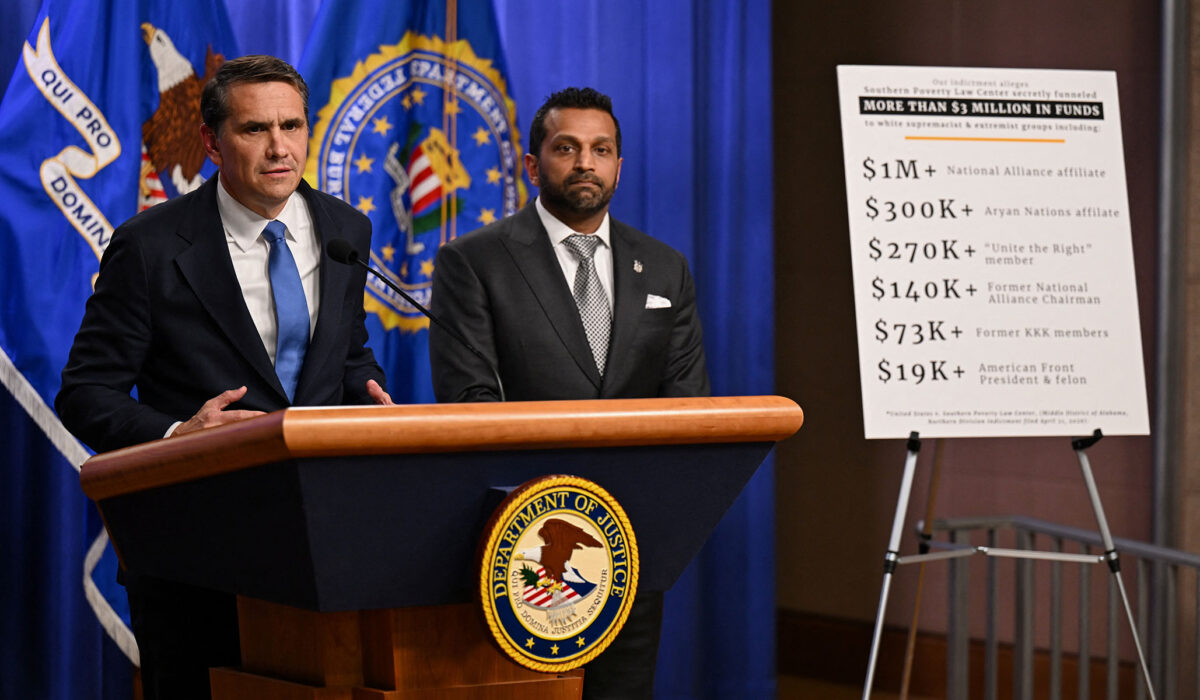
DOJ Accuses SPLC of Covertly Funding Informants in Extremist Groups
“The Southern Poverty Law Center has been secretly funding ‘informants’ and infiltrators in multiple white supremacist groups around the country, the DOJ charges.” That allegation landed like a bomb in conservative circles where concerns about bias and secrecy already run deep. The Justice Department’s move frames the SPLC not just as a watchdog but as an active player inside extremist networks.
The charges allege a pattern of covert activity that raises basic questions about who gets to operate undercover inside domestic groups. Republicans watching this feel vindicated in their long-standing critique that certain nonprofits act with political motives rather than neutral civic goals. If the allegations are true, the behavior described is a troubling mix of private influence and government attention.
Beyond the headline, the case forces a larger debate about transparency when private entities and law enforcement intersect. Citizens expect accountability from nonprofits that claim public-interest status, especially when those groups appear to fund or place informants. The idea of private organizations embedding operatives inside American associations should make anyone uneasy about unchecked influence.
Legal experts will sort through statutes and precedents to determine whether the SPLC crossed any lines that warrant criminal penalties. Republicans argue that enforcement must be impartial and visible, not shaped by which side of the political aisle the target sits on. The Justice Department’s willingness to charge in this atmosphere suggests at least one branch of government is taking the conduct seriously.
There are also civil liberties implications here that deserve attention from all sides. Infiltrators and informants operating without clear oversight can trample associative rights and chill lawful political activity. That’s why watchdog rules and reporting obligations exist, and why any alleged misuse of private funding for secret operations looks particularly problematic.
Politically, the fallout will ripple through debates over how extremist threats are monitored and who gets to define those threats. Conservatives have long warned that labels like ‘extremist’ can be applied selectively, silencing dissent or targeting ideological opponents. This case could reinforce demands for clearer, neutral standards and for limits on private actors who wield investigative power.
Practically, the SPLC will face litigation, scrutiny of its funding streams, and questions about internal controls that allowed alleged informant programs to develop. Donors, partners, and courts will want documents and testimony that explain decision-making and oversight. The organization’s reputation is on the line, and so is the public’s faith in how domestic security issues are handled.
At the same time, investigators and officials must avoid turning this into a broad attack on legitimate efforts to counter violence and hate. There is a real need to disrupt violent networks, and some coordination between private experts and law enforcement can be constructive when it is lawful and transparent. The central issue here is whether the line between assistance and clandestine intervention was crossed.
The case will test existing laws about funding, reporting, and the permissible role of nonprofits in national security matters. It also raises questions about whether current oversight mechanisms are adequate to prevent private groups from acting as quasi-law enforcement. Whatever the legal outcome, the controversy will shape how Americans think about the balance between combating extremism and protecting political freedom.