

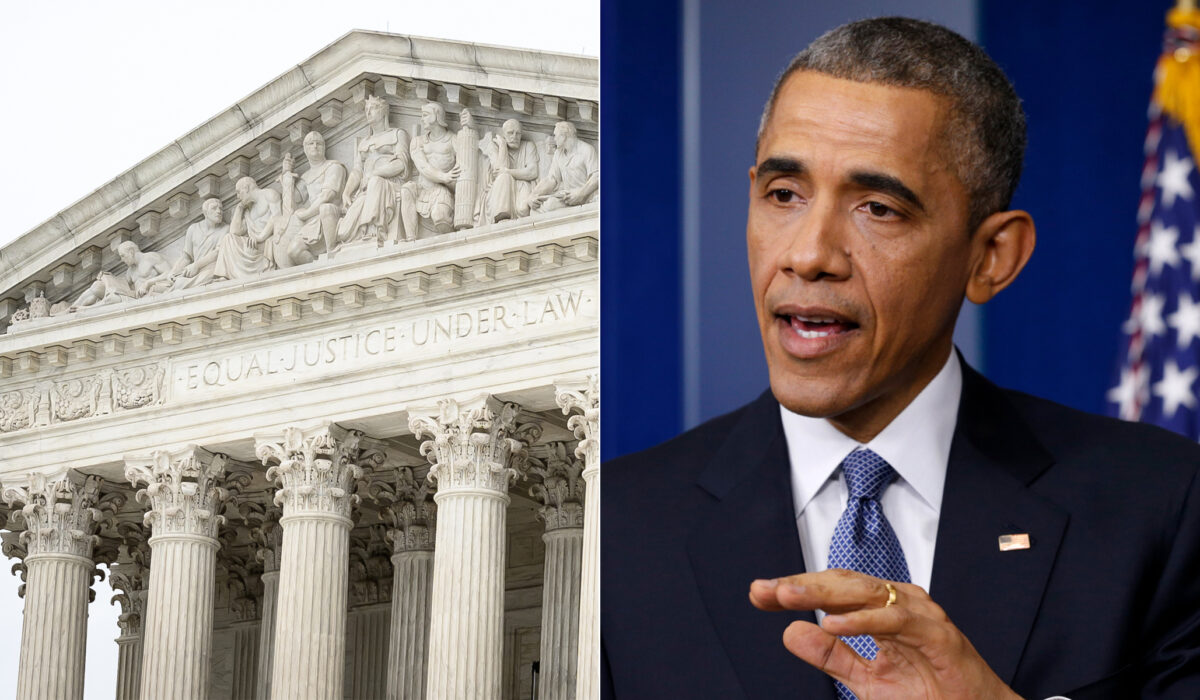
Obama and the Court: Who Broke the Rules?
The New York Times accidentally makes a point worth hearing: in the clash between the Supreme Court and the executive branch, Barack Obama stands out as the norm-breaker. That is a striking claim coming from a paper known for defending presidential power. The detail worth noting is how the narrative flipped from a story about judicial overreach to a story about executive audacity.
Republicans should not let that slip by as mere partisan trivia. The pattern of pushing the boundaries of executive authority became a central feature of the Obama years, and the Court’s pushback was a natural reaction. When a president treats precedent and ordinary statutory limits as suggestions, the justices will step in to restore the balance.
Federalism and separation of powers exist to prevent any single branch from gaining unchecked power. The executive branch under Obama often tested those limits through unilateral policies and broad administrative interpretations. That testing invited a constitutional correction, not an ideological crusade against the president.
Constitutional conservatives framed the Court’s interventions as defending the rule of law rather than attacking a political party. That message carries weight when the public sees a president acting as if legal constraints can be overridden by policy goals. The optics change when the media admits the executive, not the Court, raised the stakes.
Norms matter because they are the informal guardrails that keep our system functioning between formal rules. When executives ignore those guardrails, courts are left to repair the damage piecemeal. This creates controversy, but it also restores predictability and legal clarity.
Policy advocates who prize stability should be the first to question any executive who bypasses Congress and relies on administrative fiat. Congress writes laws and the president enforces them. When enforcement turns into lawmaking by decree, separation of powers is hollowed out.
The public conversation should focus on institutional fitness rather than personalities. A president who expands executive reach invites institutional correction, and that correction looks messy but is necessary. Republicans can point to this as an argument for stronger adherence to constitutional limits across all administrations.
Courts are imperfect and sometimes make mistakes, but their role as a check on the executive is constitutional, not partisan. When the Supreme Court declines to accept executive reinterpretations of statutes, it is usually because clear law exists and needs enforcement. That is preferable to letting policy be set by unelected officials operating from the Oval Office.
Critics who frame these judicial moves as radical ignore the context of years of administrative expansion. The right way to respond is to restore clarity to the law and insist that Congress exercise its legislative duties. That approach respects both democratic accountability and constitutional structure.
Ultimately this episode should trigger a debate about how to rebuild normal political processes. Republicans can insist that Congress take back its constitutional responsibilities and that presidents accept the limits of their authority. If the rule of law matters, then remedies should focus on institutional repair rather than partisan triumph.